
How to Outrank Bigger Competitors in Local Search
A national chain has a marketing budget you cannot match, a domain authority your website will never beat, and a paid search team optimising their ads while you are running your business.
On Google organic search, they will outrank you. On Google Ads, they will outspend you. On Google Maps, none of that matters.
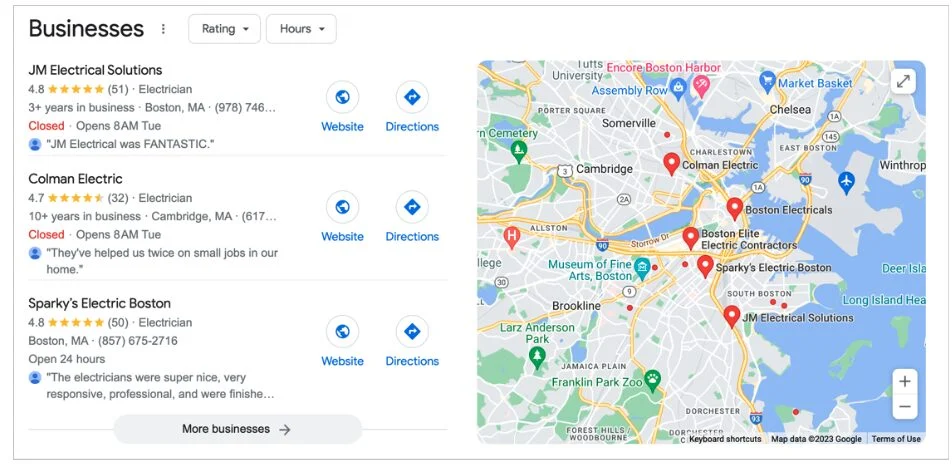
The Map Pack does not rank by budget. It ranks by Relevance, Distance, and Prominence — and a well-run local business can win all three in its own market.
Small businesses are consistently outranking national chains in the Map Pack for local searches, not because they have more resources, but because they have built profiles that Google trusts and customers choose.
That is the advantage this guide is about.
Table of Contents
- Why Google Maps Levels the Playing Field
- How the Map Pack Actually Works
- Profile Optimisation for Small Businesses
- Reviews as a Small Business Competitive Edge
- Local Search Behaviour and How to Capture It
- AI Search and Small Business Visibility
- 8 Actions That Move Your Map Pack Ranking
- GMB Crush Takeaways
On traditional organic search, ranking is heavily influenced by domain authority, which is largely a function of how long you have been building backlinks and how much content you have published.
A new or small business website competes against established sites that have been accumulating authority for years. Catching up requires significant time and resources.
For most small businesses, ranking for broad competitive terms in organic search is not a realistic near-term goal.
Google Maps operates on different signals. Domain authority is not a direct Map Pack ranking factor.
What matters is: how accurately your Google Business Profile describes your business and its services (Relevance), how close you are geographically to the person searching (Distance), and how well-reviewed, active, and complete your profile is (Prominence).
A small business with a well-configured profile, a consistent review acquisition workflow, and an active posting schedule can outrank a chain with a hundred-person marketing team on all three of these signals within its local area.
The geographic concentration advantage
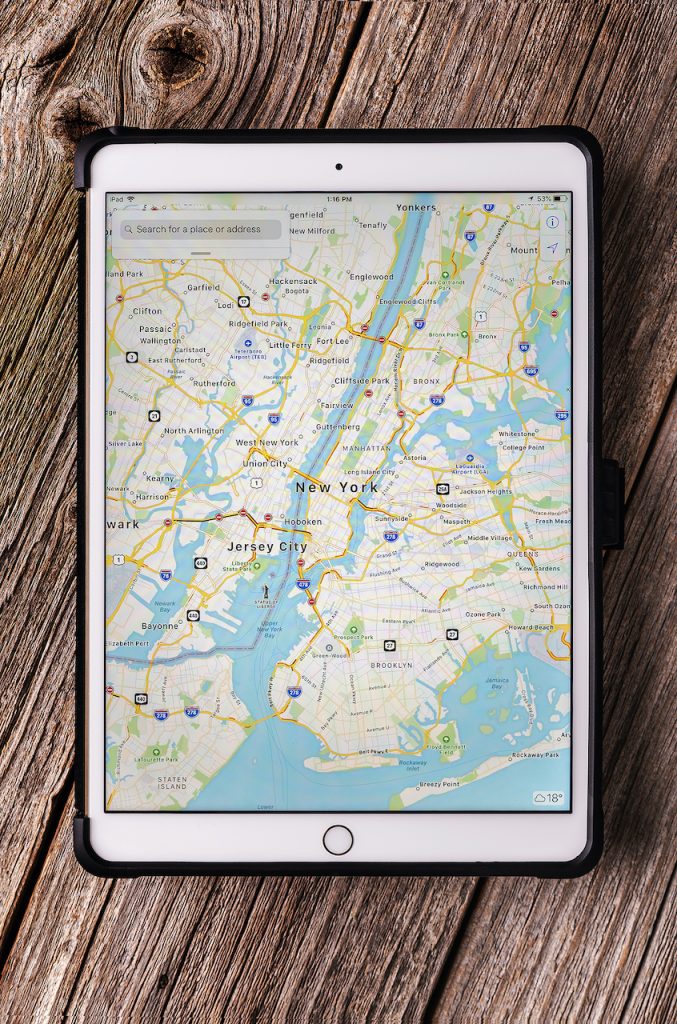
Every small business has one structural advantage in Google Maps that large multi-location businesses do not: geographic focus.
A local independent plumber in Manchester is optimising for one market. A national plumbing franchise is managing 200 locations with varying levels of attention across all of them.
The franchise’s central marketing team cannot give each location the individual profile attention that a motivated independent operator can give their single listing.
This is where most Map Pack wins for small businesses come from. Not from outspending competitors, but from out-optimising them in the specific local market where the small business has its entire operation and attention focused.
The national chain’s Manchester listing is one of 200. Your listing is your only one. That asymmetry, used deliberately, is a genuine competitive advantage.
What Google Maps provides that advertising cannot
A well-positioned Map Pack listing provides something that paid advertising cannot replicate: implicit endorsement.
When Google places your business in the top three results for a local search, it is telling the searcher that Google considers you one of the best matches for their query in their area.
That endorsement carries trust weight that an ad label does not. Customers who click on a Map Pack result are clicking on what they perceive as a recommendation.
Customers who click on an ad are clicking on what they know is a paid placement.
This trust differential translates directly into conversion rates. Map Pack clicks convert at higher rates than ad clicks for the same query type across most local business categories.
For small businesses that cannot sustain ad spend indefinitely, the Map Pack is the channel that produces compounding returns: better profile, better ranking, more clicks, more reviews, stronger profile, better ranking.
See Exactly Where You Rank on Google Maps
Run a geo-grid audit and see your Map Pack position across your full area. Find where larger competitors are beating you and where you have the opportunity to take Map Pack positions they have ignored.
A well-optimised Google Business Profile is the foundation of every Map Pack success story for small businesses.
The businesses that consistently outrank their competitors in local search have addressed more of the following profile elements, more carefully, than the businesses they have displaced.
Category selection: your highest-leverage decision
Your primary GBP category is the single most important ranking decision on your profile.
It determines which search queries you are eligible to appear for and which competitors you are stacked against.
Most small businesses default to the broadest available category. The businesses outranking them have almost always chosen the most specific accurate option.
If you run a hair salon, ‘Hair Salon’ outperforms ‘Beauty Salon’ for the queries your highest-intent customers are using.
If you run an Italian restaurant, ‘Italian Restaurant’ outperforms ‘Restaurant.’
If you are a plumber specialising in boiler installation, ‘Boiler Installation Service’ as a secondary category alongside ‘Plumber’ as primary creates eligibility for a distinct set of high-conversion queries that competitors using only ‘Plumber’ cannot reach.
Use GMB Crush’s competitor audit to check the exact primary and secondary categories the businesses ranking above you are using.
The category data of your top-ranking local competitors tells you more about what is working in your specific market than any general guide can.
Profile completeness as a trust signal
For small businesses, profile completeness serves a function beyond ranking.
Prospective customers who find a local independent business on Google Maps are often evaluating whether it is a real, established, trustworthy operation.
A profile with photos, a detailed description, complete hours, a services menu, and recent reviews reads as a legitimate, active business.
A profile with none of those elements reads as a potential risk.
The completeness gap between the Map Pack position you currently hold and the one above you is almost always smaller than it appears.
From real optimisation work, small businesses that spend three to four focused hours completing their profile, adding photos, and building out their services menu see ranking movement within weeks.
The ceiling on what a complete, well-maintained profile can achieve in local search is significantly higher than most small business owners realise.
Photos: the conversion signal most businesses underestimate
Photos influence both ranking and conversion. Profiles with complete photo sets receive more clicks and direction requests than those without, across every local business category.
For small businesses competing against chains, original photography of your actual premises, your actual team, and your actual work is a stronger trust signal than the professionally produced but generic imagery that franchise locations often use.
Upload at minimum ten photos at launch. Add new photos monthly. Photograph using a smartphone where possible, because smartphone photos are automatically geo-tagged to your business location, adding a geographic reinforcement signal that camera photos without geo-data do not provide.
Audit Your GBP Against Your Top Local Competitors
GMB Crush compares your profile against the businesses ranking above you and shows you exactly which fields they have optimised that yours has not. Start your 14-day trial today.
- Reviews as a Small Business Competitive Edge
Reviews are where small businesses have their most durable competitive advantage over larger competitors, if they use it.
A single-location business whose owner is personally invested in every customer’s experience can build a review profile that a multi-location chain, managing customer service across hundreds of locations with variable quality, will struggle to match at the individual location level.
Why volume and velocity both matter
Review volume establishes the credibility threshold. Below a certain count, which varies by category and market but typically sits around 20 to 30 for most local categories, a profile reads as unproven regardless of its star rating.
Above that threshold, review velocity — the consistent rate at which new reviews arrive month after month — becomes the dominant ongoing ranking signal. A business adding four to six new reviews per month consistently will outperform a business with a larger historical total that has been static for six months.
For small businesses, building review velocity is operationally simpler than for large operations because the customer relationship is more personal.
The most effective review acquisition approach for any local business is a direct, personal ask from the owner or a team member immediately after a positive experience, followed by a text message with your Google review link within two hours of the interaction concluding.
No automation required. No campaign needed. Just a consistent workflow built into how you close every positive customer interaction.
The content advantage of personal service businesses
Customers who interact with the owner or a long-term team member write more specific, more personal, and more keyword-rich reviews than customers who interact with a rotating staff member at a chain location.
A review that says ‘Sarah did an amazing job with my balayage, the most natural colour result I’ve had in years’ is more valuable than ‘great service, would recommend’ both as a trust signal to prospective customers and as an indexed keyword signal to Google.
The personal service that is the defining quality of a well-run small business produces better review content than the standardised service of a chain.
That review content becomes permanent keyword evidence on your profile. It is one of the compounding advantages of small business local SEO that does not require any additional investment beyond doing your job well and asking for the review.
Responding to reviews: outpacing the chain
Large multi-location businesses often have inconsistent review response rates because managing review responses at scale is operationally challenging.
A small business owner who responds to every review, every time, within 24 hours, builds a public record of engagement and responsiveness that most chain locations cannot match.
Every prospective customer who reads your profile sees that responsiveness.
It is a conversion signal as much as a ranking one.
Recommended Reading
GBP Ranking Factors: how Relevance, Distance, and Prominence determine your Map Pack position
Understanding how customers actually search for local businesses tells you which queries to optimise for and what profile elements most influence the decision once they find you.
How local search intent works
Local searches fall into three broad intent categories, and each requires a different profile element to serve it well.
Categorical intent searches ('coffee shop near me,' 'electrician Manchester') are served by your primary GBP category, your location, and your overall profile strength. These are the broadest queries with the most competition.
Service-specific intent searches ('emergency boiler repair,' 'Invisalign provider near me,' 'garden decking installation') are served by your secondary categories, your services menu entries, and any dedicated content on your website.
These are narrower queries with higher conversion intent. Problem-aware searches ('my drain is blocked,' 'tooth pain what to do') lead to informational content that then funnels toward service-specific queries.
These are typically served by website content rather than directly by GBP, but GBP review content that mentions service types contributes to relevance for these queries over time.
For small businesses with limited time and resources, the highest return on optimisation effort is usually in service-specific intent searches.
Competition is lower than for categorical searches, conversion intent is higher, and the optimisation work required is straightforward: add the service to your GBP services menu, add secondary categories that match the service type, and if possible create a dedicated page on your website.
Mobile search and the small business advantage
The majority of local business searches are conducted on mobile devices.
Mobile search behaviour tends toward shorter queries, faster decision-making, and higher call-through rates than desktop search.
A prospective customer searching for a local service on their phone is typically in proximity to your area, has a current need, and is ready to make contact.
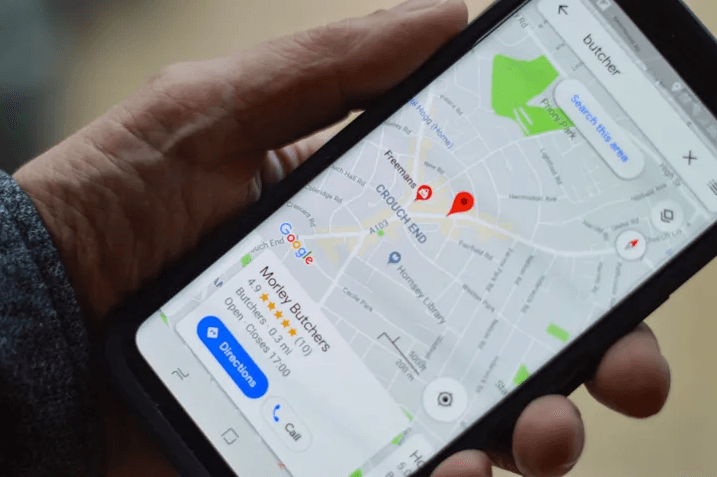
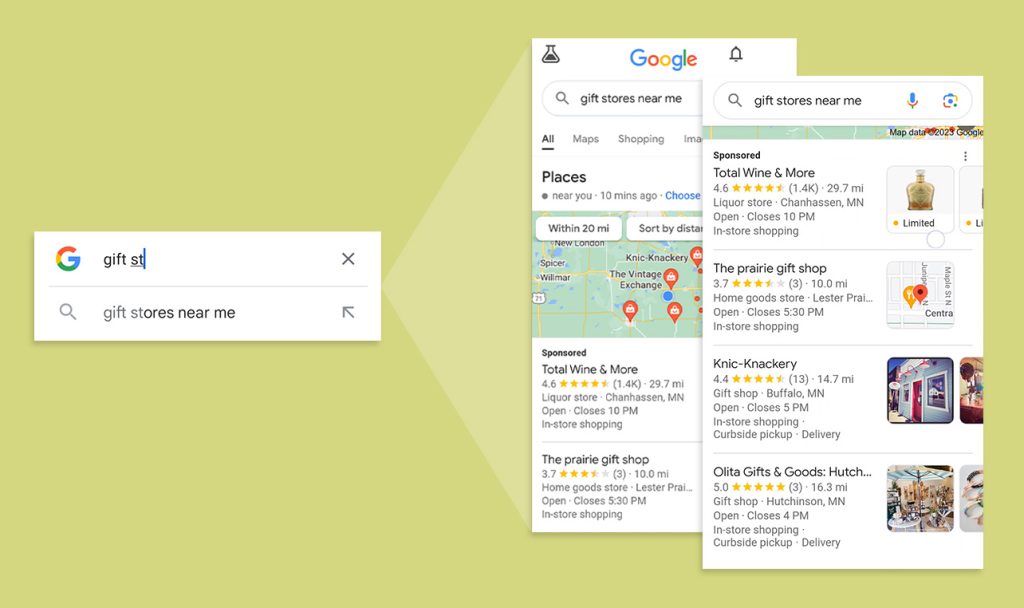
The Map Pack is designed specifically for this behaviour: a name, a rating, a distance, and a call button visible without scrolling.
For small businesses, this mobile-first search pattern favours the businesses that appear credible in the three to five seconds a mobile user spends evaluating a Map Pack result.
A strong star rating, a recent review from this week, a business name that clearly indicates the service, and a photo that shows a professional operation are the elements that convert a mobile Map Pack view into a call.
These are all within your direct control.
What actually matters now: the AI Pack rewards exactly what makes a well-run small business different from a chain. Specific, genuine, detailed content that reflects real service delivery. The businesses building those profiles now are establishing a local visibility advantage that compounds as AI-driven search formats become dominant. The window to build that advantage before local competitors do is still open.
Stop Optimising Without Data
GMB Crush gives small businesses the same competitive intelligence that large chains pay agencies for. Category data, review analysis, geo-grid rankings, AI Overview insights. All in one platform.
- 8 Actions That Move Your Map Pack Ranking
These are the eight optimisation actions that produce the most consistent ranking improvement for small businesses, ordered by typical impact and accessibility:
- Switch to your most specific accurate primary category. If you are using a broad category when a more specific one exists and accurately describes your main business offering, switching to the specific category is the highest-leverage single change available. Check what your top-ranking local competitors are using in GMB Crush before making the change.
- Complete your services menu. Add every service or product you offer with a name and description written in the plain language your customers use when they search. Each entry is indexed separately and expands your query eligibility without touching your website.
- Add secondary categories for every distinct service type you offer. Each secondary category creates a new set of query eligibility that your primary category alone does not cover.
- Upload at least ten original photos across exterior, interior, team, and work categories. Add two to three new photos every month. Consistent photo activity is a Prominence signal that contributes to ranking the same way review velocity does.
- Build a review request into your standard post-interaction workflow. A direct personal ask followed by a text with your review link within two hours consistently outperforms every other approach. Four to six new reviews per month is the target that builds a compounding velocity advantage over time.
- Respond to every review within 24 hours. Responses contribute to Prominence and signal active profile management to both Google and prospective customers.
- Post on your GBP profile at minimum once per week. Offer posts, What’s New posts, and Event posts each display differently on your profile. Consistent posting activity is one of the fastest and most accessible ways to signal an actively managed profile.
- Run a GMB Crush geo-grid audit for your top three search terms. For most small businesses, ranking is uneven across their local area, stronger close to the address and weaker further out. The geo-grid makes the invisible gaps visible, so you know where to target your optimisation effort rather than improving a profile that is already winning in some areas.
- GMB Crush Takeaways
Google Maps is the most accessible and highest-return marketing channel available to a small local business.
It costs nothing to create, it is free to maintain, and a well-optimised profile produces compounding returns over time as reviews accumulate and Prominence grows. Here is where to act first:
- Check your primary category today against what your top-ranking local competitors are using. If you are using a broader category than the businesses above you, that single change is your highest available leverage point and it takes under two minutes to implement.
- Complete your services menu: add every service you offer with a specific description. This is the fastest available expansion of your query eligibility and requires no website work or budget.
- Build review acquisition into every customer interaction: the direct personal ask, the text with the review link, within two hours of a positive experience. Four to six reviews per month, sustained consistently, builds a competitive review profile that larger businesses managing hundreds of locations cannot easily replicate at the individual listing level.
- Add photos regularly: ten to start, two to three new ones every month. Original photography of your real premises, your real team, and your real work outperforms professionally produced but generic chain imagery as a trust signal.
- Run a GMB Crush geo-grid audit to find out where in your area you are visible and where you are not. The gap between where you rank and where your customers live and search is where your next optimisation effort belongs.
The businesses dominating the Map Pack in every local market are not the ones with the biggest budgets.
They are the ones that understood early that Google Maps rewards effort and specificity, not spending.
Every optimisation step above is within the reach of any small business owner willing to spend the time.
The ones that spend it are the ones whose phones keep ringing.
One Platform. Every Local Ranking Signal.
Audit, optimise, track, and outrank. GMB Crush gives small businesses the data and tools to compete on an even footing in local search.