
The Complete Strategy Guide for Local Businesses
Every local business has access to the most powerful local marketing channel ever created. Most of them are using it badly. Google Maps is not a directory. It is not a listing site.
It is the primary interface through which a local customer, at the moment they have decided they need something and are ready to act on that decision, finds the businesses they will contact. The intent quality of that moment is higher than almost any other marketing touchpoint available.
This guide covers the complete Google Maps marketing framework: what makes this channel structurally different from every other form of local marketing, how Google decides which businesses appear in it, what a complete Google Maps marketing strategy looks like in practice, and how the channel is evolving as AI-driven formats reshape local search.
The specific deep-dive guides for each element of the strategy are linked throughout.
Table of Contents
- Why Google Maps Is the Primary Local Marketing Channel
- Local Search Intent: Why This Channel Converts
- How Google Maps Decides Who Appears
- The Complete Google Maps Marketing System
- Measuring Google Maps Marketing Performance
- How AI Is Reshaping Google Maps Marketing
- The Google Maps Marketing Resource Library
- GMB Crush Takeaways
For most local businesses, Google Maps is now the primary channel through which new customers find them. Not word of mouth, not advertising, not their website, and not social media.
When someone in your area needs the type of business you run, their first action is almost universally to open Google and search, and what they see in the first few seconds of that search determines who they contact.
The Local 3-Pack, the three business listings displayed at the top of Google search results for local queries, is the most valuable digital real estate available to any local business.
It appears before every organic search result, before most paid ads, and above every other form of web content for the searches that drive actual local purchasing decisions.
A business in the 3-Pack is positioned at exactly the right moment, with exactly the right information, in front of exactly the right audience.

What makes this channel structurally unique
Google Maps marketing differs from every other local marketing channel in four structural ways that make it disproportionately valuable for most business types.
First, it cannot be purchased, unlike paid search ads or social media advertising, 3-Pack position is earned through the quality and completeness of your Google Business Profile, not bought.
Second, it captures decision-stage intent, the customer who searches for a local business on Google has already decided they need that type of business and is now choosing between options, not still in an awareness or consideration phase.
Third, it carries implicit endorsement. Google’s decision to display your business as one of the top three results reads as a recommendation to the searcher, carrying trust that paid placements do not.
Fourth, it produces compounding returns. A well-maintained profile generates reviews, which improve Prominence, which strengthens ranking, which generates more visibility and more reviews.
How Google Maps fits in the local marketing mix
For most local businesses, the optimal marketing mix is built around Google Maps as its primary foundation, with all other channels serving to support and amplify it.
Your website reinforces your GBP profile’s entity signals. Your social media presence generates citations and links that contribute to Prominence. Your offline customer interactions produce the reviews that build your reputation in Google’s system.
When all elements of your marketing are aligned to support your Google Maps presence, the compounding effect is significantly stronger than any individual channel operating in isolation.
See Where You Stand in Your Local Market Right Now
GMB Crush maps your Map Pack ranking position across your full service area and audits your profile against the top competitors, so your Google Maps marketing strategy is built on data, not assumptions.
The reason Google Maps marketing produces higher conversion rates than most other local marketing channels is the intent quality of the audience it captures.
Understanding local search intent is what allows you to build a Google Maps strategy that is optimised not just for visibility but for the specific types of customers and searches that drive your business’s growth.
The three layers of local search intent
Local searches fall into three intent layers, each capturing customers at a different stage of their decision journey:
Immediate intent searches are queries from customers who have a current, active need and want to act on it right now. ‘Emergency dentist,’ ‘plumber near me now,’ ‘restaurant open late tonight.’
These searches have the shortest decision windows; the customer will contact one of the first credible options they find and stop searching.
For businesses in categories with high immediate intent, the Map Pack position is everything, because the first credible result typically wins.
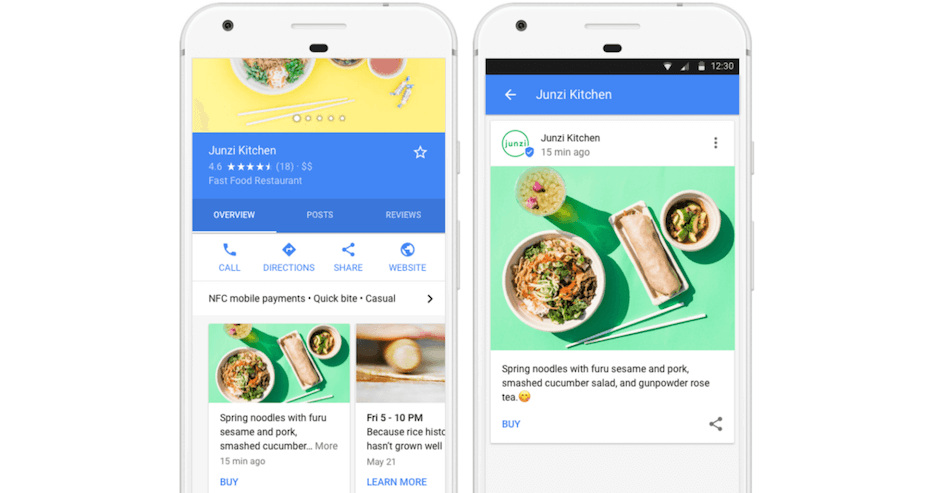
Comparative intent searches are queries from customers who know what they need but want to choose the best option.
‘Best Italian restaurant,’ ‘dentist accepting NHS patients,’ ‘rated plumber near me.’
These searches involve slightly more evaluation; the customer will compare two or three options before deciding.
Profile quality, review depth, and the specific information available on each listing influence the decision as much as ranking position does.
Planned intent searches are queries from customers who are not yet ready to act but are researching for a future need. ‘Invisalign cost,’ ‘how to find a good plumber,’ ‘dental implants near me.’
These searches often lead to a website visit before any contact, and the customer may return to Google Maps later when they are ready to act.
A business that appears for these searches and delivers a strong profile impression builds recognition that converts when the customer is ready.
How intent affects your Google Maps strategy
Different intent layers require different optimisation priorities. Immediate intent categories need flawless profile basics, accurate hours, an accessible phone number, recent positive reviews, and a clear service description, because the decision happens in seconds.
Comparative intent categories need rich review content, complete service information, and profile elements that allow customers to confirm a specific fit. Planned intent categories benefit most from appearing for informational searches and delivering a website that converts the initial research visit into a return action.
Most businesses serve customers across multiple intent layers simultaneously. A dental practice receives emergency dental searches (immediate intent), general dentist searches from patients looking to register (comparative intent), and Invisalign or implant cost searches from patients researching high-value treatments (planned intent).
The complete Google Maps marketing strategy addresses all three layers.
- How Google Maps Decides Who Appears
Google’s local ranking algorithm evaluates three signals to determine which businesses appear in the Map Pack: Relevance, Distance, and Prominence.
Understanding how each signal works and which one is the most actionable for your specific situation is the foundation of an effective Google Maps marketing strategy.
Relevance: are you the right match?
Relevance is how well Google determines your business matches the intent of a specific local search query.
It is primarily driven by your primary GBP category, your secondary categories, your services menu, your business description, and the coherence between your GBP profile and your website content.
A business with ‘Italian Restaurant’ as its primary category is a more relevant candidate for ‘Italian restaurant near me’ searches than one with the generic ‘Restaurant’ category, even if every other ranking signal is identical.
Relevance is the signal most businesses leave under-optimised. Getting it right is often a matter of hours of profile work: choosing the most specific, accurate primary category, adding relevant secondary categories for each distinct service type, completing the services menu, and connecting the website content to the profile’s category and service claims.
Distance: proximity to the searcher
Distance is the geographic proximity between your business address (or service area for businesses without a fixed customer location) and the location of the person conducting the search.
Google calculates this dynamically for every search based on the searcher’s current location, which is why the same business can rank differently for the same query depending on where the searcher is located.
Distance is the signal that businesses can influence the least in terms of their physical location. What they can influence is how Google maps their geographic relevance: through accurate service area configuration, through review acquisition from customers across their full catchment area, and through consistent NAP data across all online sources.
Prominence: how well-known and trusted are you?
Prominence is Google’s assessment of how established, active, and trusted a business is in its local area.
It is built from reviews, profile completeness, photo activity, GBP post frequency, behavioral engagement signals, website authority, and citation consistency. Prominence is the signal that responds most directly and most predictably to sustained marketing effort.
A business that builds review velocity, maintains its profile, and posts consistently will see Prominence improvement that produces compounding ranking gains over months.
Your Competitors Are Already Using GMB Crush
GBP audits, geo-grid ranking maps, competitor analysis, review monitoring, and AI Overview insights. All in one platform. Start your 14-day trial today.
An effective Google Maps marketing strategy is not a collection of individual tactics. It is a system where each element reinforces the others, and the whole produces more than the sum of its parts.
Here are the components of that system and how they work together.
Your Google Business Profile: the core asset
Your Google Business Profile is the central node of your Google Maps marketing system. It is what appears in the Map Pack, what customers evaluate before deciding to contact you, and what Google assesses when determining your ranking position.
A well-optimised GBP profile with precise category configuration, complete services information, high-quality photos, and consistent activity signals is the foundation that every other component of the system builds on.
The most critical GBP decisions, primary and secondary category selection, services menu completeness, health and service attributes, business description, and appointment booking configuration, are covered in full in the dedicated GBP optimization guide in the resource library.
Review strategy: building Prominence over time
Reviews are the Prominence signal that most directly separates competing businesses in the same local market. Review volume establishes a credibility threshold.
Review velocity, the consistent monthly rate of new reviews, builds an ongoing Prominence signal that compounds over time. Review content, the specific text that customers write, contributes both to the trust signals that prospective customers evaluate and to the keyword evidence that Google indexes for Relevance assessment.
The most effective review strategy is operationally simple: a direct personal ask from a team member immediately after a positive customer interaction, followed by a text message with your Google review link within two hours.
Four to six new reviews per month, consistently sustained, produce a velocity advantage that static competitors cannot close quickly.
Your website: the entity reinforcement layer
Your website reinforces every GBP signal you have built by providing Google with a corroborating source of information about your business’s identity, location, and services.
Each service listed on your GBP services menu should have a corresponding dedicated page on your website. Your business name, address, and phone number should appear identically on your website and your GBP profile. Your website content should naturally use the service and location terms that your customers search for.
The coherence between your GBP profile and your website is what Google uses to build a confident entity signal about your business.
The businesses ranking most consistently for specific service queries in competitive local markets have almost always built strong entity coherence between their profile and website, not just optimised each element independently.
Citations: the distributed identity signal
Local citations, mentions of your business name, address, and phone number on external directories, industry platforms, and social profiles, contribute to Google’s confidence in your business entity.
Consistent, accurate NAP data across your major citation sources builds the identity signal that reinforces your GBP data. Inconsistent citations, particularly from outdated address or phone number data, create entity confusion that weakens your ranking signals.
Citation strategy for Google Maps marketing is not about volume; it is about accuracy and consistency across the highest-authority sources relevant to your category and market.
Google Business Profile and your own website are your highest-priority sources, followed by Apple Maps, Bing Places, and the major directories specific to your industry.
GBP activity: the ongoing management signal
Google evaluates whether a business is actively managed as part of its Prominence assessment.
A profile that receives weekly posts, has new photos added monthly, and has every review responded to within 24 hours reads as a live, well-managed business.
A profile that was last updated months ago reads as less active and less reliable, even if the business itself is operating normally. Consistent, low-effort activity maintenance, one post per week, new photos monthly, review responses within 24 hours, produces a compounding active management signal that distinguishes your profile from competitors who are not maintaining theirs.
The key factor is this: Google Maps marketing is not a campaign. It is a managed asset. The businesses that treat their GBP profile as something to be actively maintained, rather than set up and forgotten, consistently hold better Map Pack positions and generate more customer contacts than those that do not. The return on that ongoing management effort compounds over time in a way that no advertising campaign can replicate.
- Measuring Google Maps Marketing Performance
The performance of your Google Maps marketing strategy is visible in your Google Business Profile’s Insights data, in your Map Pack ranking position, and in the business outcomes, calls, visits, and enquiries that the channel generates.
Measuring all three layers gives you a complete picture of whether your strategy is working and where to direct improvement efforts.
GBP Insights: the channel-specific metrics
Your GBP Insights dashboard shows the direct engagement metrics generated by your profile: profile views (how many times your listing appeared in search results), website clicks, phone calls, direction requests, and appointment link clicks.
Track these monthly as trends rather than absolute numbers. Consistent month-over-month growth in phone calls and direction requests following optimisation work confirms the connection between your Google Maps marketing activity and real customer acquisition.
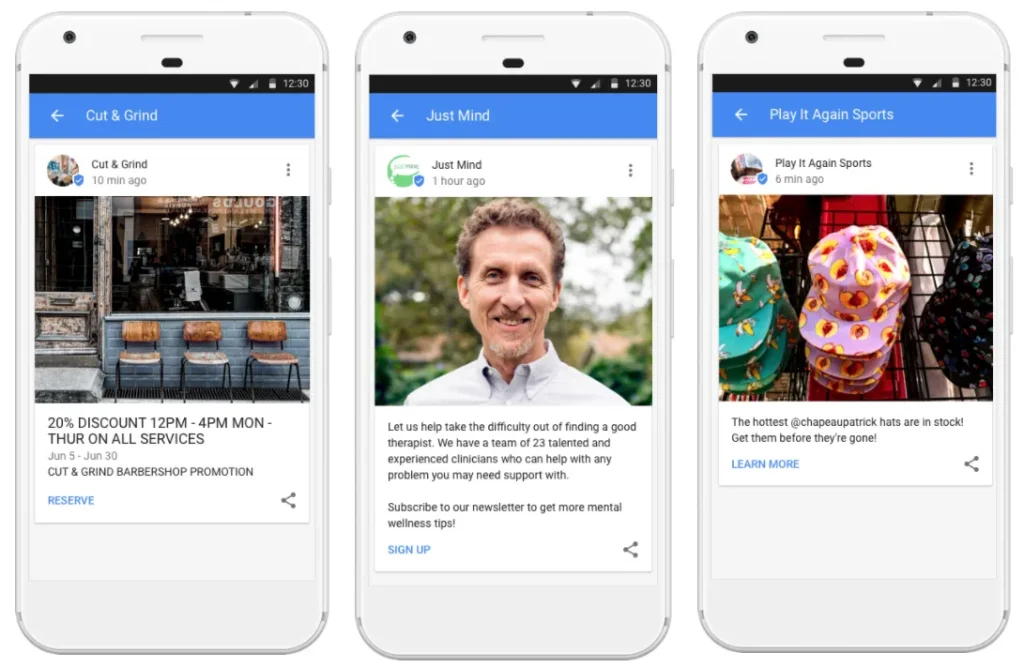
Search queries in Insights show the specific terms customers used to find your profile. This data is directly actionable: terms appearing with high impression volume but no corresponding profile strength represent category or services gaps.
Terms you would expect to see but that are absent represent queries for which your profile is not yet ranking, opportunities to close through category additions, services menu completeness, or review content strategy.
Ranking position: the predictive metric
Your Map Pack position for specific search terms across your service area is the forward-looking metric that predicts your future customer acquisition trajectory.
Rising ranking positions produce rising customer contact volume with a short lag. Declining positions produce declining contacts. Monitoring your ranking position regularly gives you the leading indicator to act on before the business impact materialises.
GMB Crush’s geo-grid tracker maps your ranking position across your full service area for any target search term, showing you where your Google Maps marketing is working, where it is failing, and which competitor profiles are outperforming yours in specific geographic areas.
This data is the starting point for all targeted improvement work.
The Google Maps marketing landscape is changing faster in the current period than at any point since the Map Pack format was introduced.
AI-driven search formats, Google’s AI Overviews, the AI Pack, and the integration of AI into the Maps interface itself are altering which businesses appear in local results and how those results are presented to searchers.
Understanding what is changing and what is not is essential for maintaining and improving your Google Maps marketing performance through the transition.
What is changing: new result formats and selection mechanisms
For an increasing proportion of local searches, Google is now generating AI-created result summaries rather than or alongside the traditional Map Pack format.
The AI Pack presents a curated shortlist of businesses with AI-written descriptions drawn from GBP data, review content, and website information. AI Overviews generate informational summaries for local service queries that can surface specific businesses as recommendations.
Both formats appear above the traditional Map Pack for the queries that trigger them, making them primary visibility opportunities rather than secondary ones.
The businesses appearing in these AI-generated formats share consistent profile characteristics: complete, specific GBP profiles with rich service descriptions and well-populated attributes, review corpora with substantive text content rather than ratings-only feedback, and coherent website content that confirms the profile’s claims.
The AI retrieves structured, specific data. Profiles with thin or generic content are excluded from AI-generated results regardless of how well they rank in the traditional Map Pack.
What is not changing: the foundational signals
The three foundational ranking signals, Relevance, Distance, and Prominence, remain the basis of how Google evaluates local businesses.
The AI formats reward the same underlying profile quality that traditional Map Pack ranking rewards. A business with precise category configuration, strong review velocity, complete profile data, and coherent website-GBP entity signals performs well in both the traditional Map Pack and the emerging AI formats.
The investment in building a strong Google Business Profile is not made obsolete by the AI transition. It becomes more important, because the quality bar for appearing in AI-generated local results is higher than for traditional Map Pack inclusion.
Stop Guessing What Your Competitors Are Doing
GMB Crush pulls the complete GBP configuration of every business outranking you, categories, review velocity, post frequency, and profile completeness, so you know exactly what to fix first.
Recommended Reading
The Google Local 3-Pack: what it is, how ranking works, and the complete strategy to appear in it
- The Google Maps Marketing Resource Library
The GMB Crush resource library covers every element of Google Maps marketing in depth. This article is the strategic overview.
The guides below go deep on each component of the system.
GBP Profile Optimisation
- GBP Optimization: the complete 14-step guide, gmbcrush.com/google-my-business-optimization/
- GBP Categories: the complete selection strategy, gmbcrush.com/google-my-business-categories/
- GBP Posts: the complete strategy guide, gmbcrush.com/google-my-business-posts/
- GBP Name Change: rules, risks, and the right way, gmbcrush.com/google-my-business-name-change/
- GBP Multiple Locations: complete management guide, gmbcrush.com/google-my-business-multiple-locations/
Rankings and Competitive Intelligence
- Google Local 3-Pack: what it is and how to rank in it, gmbcrush.com/google-3pack/
- GBP Ranking Factors: Relevance, Distance, Prominence, gmbcrush.com/gmb-ranking-factors/
- GBP Ranking: why competitors outrank you, gmbcrush.com/google-my-business-ranking/
- Business Not Showing on Google Maps: the diagnostic guide, gmbcrush.com/business-not-showing-first-on-google-maps/
Reviews and Trust
- Google Review Attributes: how review text shapes SEO signals, gmbcrush.com/google-review-attributes/
Local SEO Foundation
- NAP Audits: fix citation inconsistency, gmbcrush.com/nap-audits/
- Local SEO for Service Area Businesses, gmbcrush.com/local-seo-for-service-area-businesses/
- Google Maps for Small Business, gmbcrush.com/google-maps-for-small-business/
- Geotagging Photos for Local SEO, gmbcrush.com/geotag-photos/
- Google Maps Direction Requests, gmbcrush.com/google-map-driving-directions-seo/
- GMB Crush Takeaways
Google Maps is where local business decisions are made. Not on social media, not in print advertising, and not on most business websites.
The businesses that understand this and build their marketing strategy around Google Maps as its primary foundation consistently outperform those that treat it as one channel among many.
- Build your Google Business Profile as the primary marketing asset it is: complete category configuration, full services menu, high-quality photos, consistent post activity, and a review acquisition workflow that produces four to six new reviews per month. This profile is the first impression the majority of your new customers will ever have of your business.
- Treat Google Maps marketing as a managed channel, not a one-time setup: the businesses holding Map Pack positions in competitive markets are actively maintaining their profiles, monitoring their review incoming, posting weekly, and watching their ranking position. Profile maintenance is a permanent operational function, not a project.
- Align your website to reinforce your GBP signals: each service on your GBP services menu should have a corresponding website page. Your NAP should match exactly across both. The coherence between your profile and website is what builds the entity confidence that drives consistent local ranking.
- Monitor your performance across all three layers, Insights data, ranking position, and business outcomes: the Insights data tells you what is happening on your profile. The ranking position tells you what is about to happen to your customer volume. The business outcomes tell you whether the channel is delivering. Tracking all three gives you the visibility to act before problems compound.
- Prepare for AI-driven local results by deepening your profile content: the AI Pack and AI Overviews reward profile specificity, review depth, and website coherence. The investment required to perform well in AI-generated local results is the same investment required to perform well in the traditional Map Pack, just with a higher bar on content quality. Start building that depth now.
Google Maps marketing is not complicated. It is the disciplined, consistent execution of a small number of high-impact activities over a sustained period.
The businesses that do it well do not have larger marketing teams or bigger budgets.
They have better systems. GMB Crush gives you the data and tools to build those systems and measure whether they are working.
One Platform. Every Google Maps Marketing Signal.
Audit, optimise, track, and outrank. GMB Crush gives businesses and agencies everything needed to execute a complete Google Maps marketing strategy and measure the results. 14-day trial, no credit card required.