
Google Big Moments and Local Search
Most local businesses think about their Google Maps visibility as a static competitive landscape: you optimise your profile, build your reviews, and hold a position in the Map Pack.
How Trending Events Affect Your GBP Visibility
Most local businesses think about their Google Maps visibility as a static competitive landscape: you optimise your profile, build your reviews, and hold a position in the Map Pack. But local search results are not static.
They are dynamic, and one of the most significant dynamics is what happens when a major local event, a trending topic, or a sudden demand spike changes the intent behind searches in your area.
Google has been building its ability to surface contextual, trending, and locally relevant content directly in search results for years.
What began as the ‘Big Moments’ concept Google’s vision for integrating breaking news and contextual information into search has evolved into the broader integration of AI Overviews, local event panels, trending query handling, and real-time content into the search interface.
For local businesses, understanding how these demand spikes work and how to position their profile to capture the opportunity is an increasingly important part of local SEO strategy.
Local search demand is not constant. It spikes predictably around events concerts, sports fixtures, festivals, public holidays, local news stories, seasonal occasions and unpredictably around breaking events, viral news moments, and sudden contextual shifts.
In each case, the spike creates a temporary but significant change in what people are searching for, at what volume, and with what intent.
A music venue that holds a major concert on Saturday sees a spike in searches for ‘parking near [venue],’ ‘restaurants near [venue],’ ‘bars near [venue],’ and ‘[venue name] area.’
Businesses in the immediate vicinity of the venue who have optimised profiles and current photo sets suddenly receive significantly more profile visits from searchers who would not have found them through an ordinary search.
Businesses with stale profiles, outdated hours, or no photos miss the spike entirely despite being physically closest to the demand.
The three types of local demand events
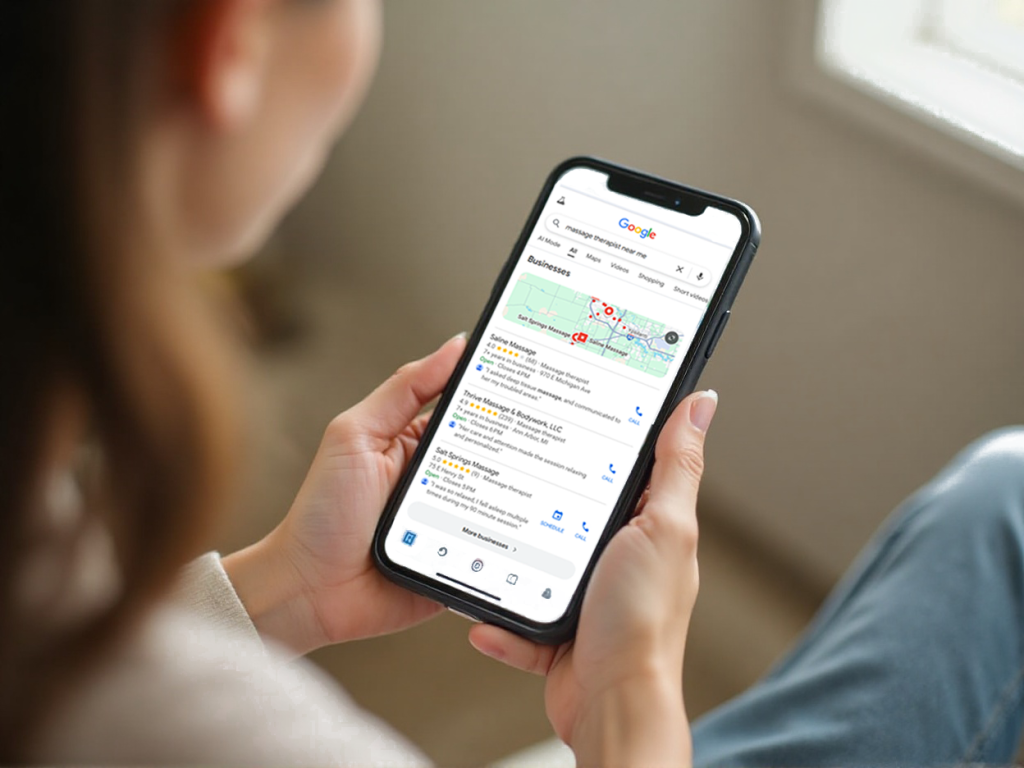
Planned recurring events: sporting seasons, school terms, public holidays, annual festivals, and regular local occasions that create predictable recurring demand spikes for specific business types.
A restaurant near a sports stadium knows exactly when its peak demand will be. A hotel in a university town knows when parents’ weekend and graduation create accommodation demand spikes.
Planned one-off events: concerts, conferences, trade shows, and major local occasions that are scheduled in advance and have a defined date.
These create a concentrated demand spike from a specific date that businesses in proximity can prepare for.
Unplanned events: breaking local news, viral moments, sudden weather events, road closures that reroute traffic any occurrence that changes search behaviour in a geographic area without advance notice.
These cannot be planned for specifically, but businesses with well-maintained, current profiles are better positioned to capture this demand than those whose profiles are stale
Track How Your GBP Profile Appears in AI-Driven Results
GMB Crush monitors your AI Overview appearances and Map Pack ranking across your service area so you know how your profile is performing in both traditional and AI-generated local results.
Google’s evolution toward integrating contextual and trending content into search results has been a decade-long project that has accelerated significantly with AI.
The mechanisms now operating are substantially more sophisticated than the ‘Big Moments’ feature concept from 2021, but the underlying ambition is the same: to make Google the most contextually accurate source of information about what is happening, locally and globally, right now.
AI Overviews and trending queries
For search queries that have a trending or news component, Google’s AI Overviews increasingly synthesise information from multiple sources including local business profiles, recent news, and event data into a single contextual response.
A search for ‘things to do this weekend [city]’ or ‘restaurants near [venue] tonight’ triggers AI synthesis that draws from GBP data, review content, event listings, and real-time availability signals.
Businesses whose GBP profiles have current posts, up-to-date hours (including special hours for events), and specific service descriptions give Google’s AI more material to work with when generating recommendations for time-sensitive, contextual queries. Businesses with thin, static profiles are less likely to be surfaced in AI-generated contextual recommendations.
Local news panels and knowledge integration
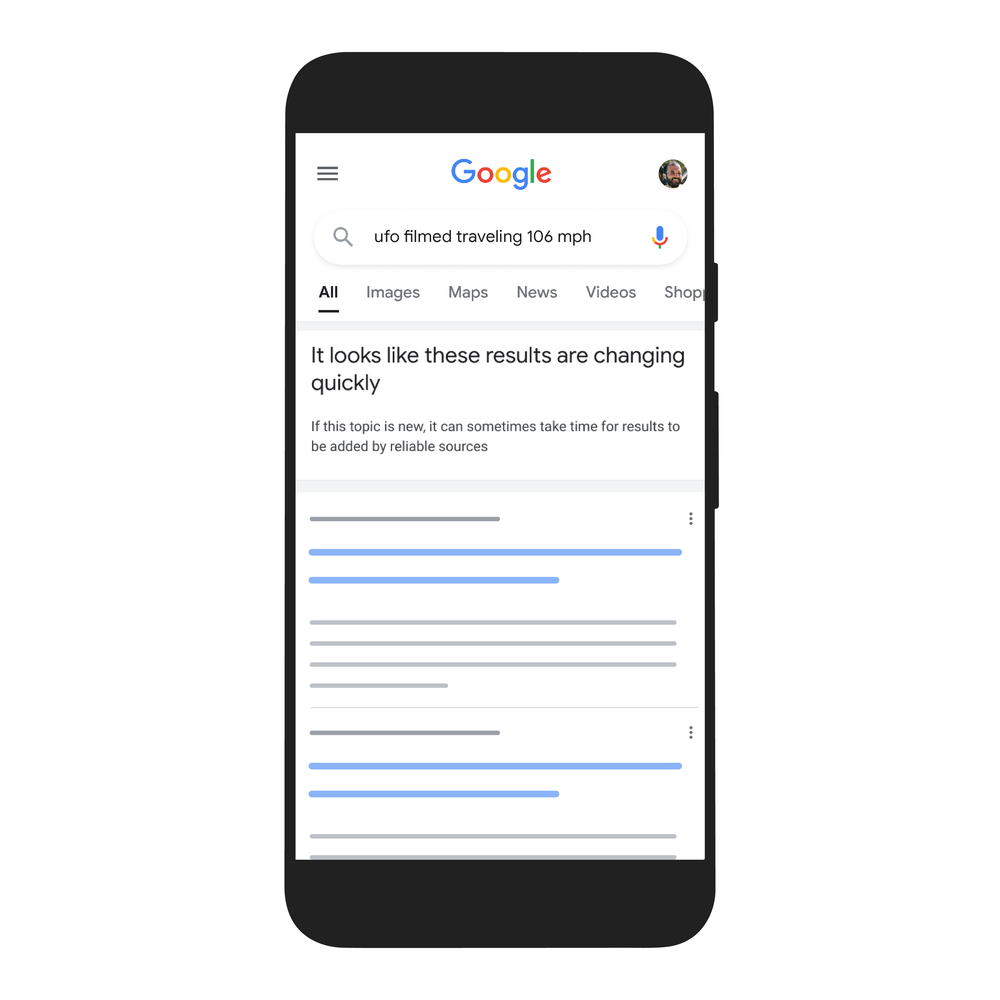
Google integrates local news content into search results for queries with a local news dimension.
For queries about local events, local businesses involved in news coverage, or local topics that have generated media interest, Google surfaces both the traditional Map Pack and news panel content simultaneously.
A local business that is mentioned in local news coverage, or that publishes relevant content about local events, can gain visibility in the news content layer of local results in addition to its standard Map Pack position.
This is the mechanism the original ‘Big Moments’ concept was pointing toward: local content publishers and businesses with news-adjacent relevance gaining additional SERP presence through Google’s integration of trusted local content sources alongside standard local business results.
- How Events Affect Map Pack Results
The Map Pack itself can shift during major local events in ways that surprise businesses who have not anticipated them.
Understanding how these shifts work allows businesses to both protect their existing positions and position themselves to benefit from temporary demand changes.
Category query spikes near event venues
When a large event occurs at a specific venue a stadium, a conference centre, an arena searches for nearby businesses in categories like parking, food, accommodation, and transport spike dramatically in the area surrounding the venue.
The Map Pack results for these queries during the event draw on the same Relevance, Distance, and Prominence signals as always, but the number of searchers conducting these queries from specific geographic points near the venue is temporarily much higher.
Businesses that normally receive modest traffic from these query types may see significant spikes. Businesses whose GBP hours do not reflect availability during evening or weekend events miss this traffic because their profile signals incorrect availability.
Businesses whose categories do not accurately reflect their service types for event-adjacent queries are not eligible for those query types regardless of proximity.
Temporary ranking position shifts
During major events, the geographic concentration of search activity around specific locations can temporarily alter the ranking calculations for businesses in those areas.
A restaurant that normally ranks fourth for its category in a given area may temporarily rank higher during an event because the searchers are concentrated within a few hundred metres of it, and its distance advantage over competitors further away becomes more pronounced at that proximity level.
These temporary shifts do not require or respond to any special optimisation. They are an output of the Distance signal responding to the changed geographic distribution of searchers during the event.
What they do require is that the profile accurately reflects availability during the event (correct hours, current photos showing the venue is operating) so that searchers who find the business act on what they find.
Your Competitors Are Already Using GMB Crush
GBP audits, geo-grid ranking maps, competitor analysis, review monitoring, and AI Overview insights. All in one platform. Start your 14-day trial today.
The businesses that capture demand spikes most effectively are not the ones who try to optimise specifically for each spike as it occurs.
They are the ones whose profiles are consistently maintained to a standard where the signals Google needs to surface them for contextual queries are always present.
Profile readiness for demand spikes is largely the same as profile readiness for ordinary searches, with a few specific additions.
Keep hours current and use Special Hours
The most common missed opportunity during local demand spikes is a business that is open and ready for additional customers but whose GBP profile shows outdated or incorrect hours.
This is particularly common for businesses that extend their hours for seasonal events, local festivals, or special occasions without updating their GBP profile to reflect the change.
Google Business Profile’s Special Hours feature allows you to set different hours for specific dates without changing your regular weekly hours. Use it for every occasion when your business operates outside its standard hours major local events, public holidays where you are open, late nights for seasonal occasions.
A profile with accurate Special Hours serves the increased demand from contextual event searches. A profile with incorrect hours misleads the searchers who find it and sends them to a competitor.
Current photos signal an active, operating business
When search demand spikes around an event, the searchers evaluating your profile make a rapid assessment of whether the business is currently operating and worth visiting.
A photo set that was last updated two years ago signals a potentially stale or inactive business. A photo set that includes recent images of your current interior, your team, your current menu or service offerings signals a live, operating business that is worth contacting.
Adding photos monthly, as a standard practice, ensures that your visual profile always looks current regardless of when a demand spike occurs.
This is part of the Prominence signal maintenance that benefits your ranking year-round, and it specifically serves the conversion function during event-adjacent traffic spikes.
Complete service information for event-adjacent queries
Businesses that serve event-adjacent needs parking, food, accommodation, transport, retail should ensure their GBP services menu specifically includes the service types relevant to their event-adjacent demand.
A car park that includes ‘event parking,’ ‘stadium parking,’ or ‘concert parking’ in its services menu is explicitly eligible for those query types. A restaurant that includes ‘pre-show dining,’ ‘group bookings,’ or ‘late dining’ signals specific relevance to the event-adjacent search intent.
The key factor is this: you cannot reactively optimise your profile for a specific demand spike that starts in four hours. The profile signals that Google uses to surface your business for contextual, event-adjacent queries are built over weeks and months. A well-maintained profile captures every spike. A stale profile misses all of them.
- GBP Posts as a Trending Content Signal
GBP posts are the most direct mechanism local businesses have for creating trending-relevant content on their profile without a website content operation.
A post about a local event announcing your extended hours for a festival weekend, sharing a special menu for a sports final, or noting your proximity to a major venue creates a topically relevant content signal that Google can surface for event-adjacent queries.
Event-specific posts that capture seasonal demand
The most effective use of GBP posts for demand spike capture is creating posts that specifically reference the upcoming event or occasion.
A restaurant near a stadium posting ‘We are open late for [event] this Saturday walk-ins welcome, book ahead for groups’ creates a post that matches the intent of people searching for dining options before or after the event.
This is more targeted than a generic ‘come and visit us’ post and more likely to appear for the specific event-adjacent queries it addresses.
Post these at least 48 to 72 hours before the event so that Google has time to index and surface the post content before the demand spike arrives. A post published the morning of an event may not be fully indexed in time to capture the peak search volume.
Seasonal and recurring event posts
For businesses with predictable recurring demand spikes a pub near a sports ground, a hotel near a conference centre, a restaurant near a theatre building a seasonal content calendar of GBP posts that anticipates the recurring events in your area produces a consistent signal of local relevance and topical engagement.
This builds a body of event-adjacent post history that strengthens your profile’s contextual relevance for these query types over time, not just during individual events.
See Your Complete Local Search Footprint
GMB Crush’s geo-grid shows your Map Pack position at every point across your service area and flags where trending or event-based query shifts are affecting your visibility.
Recommended Reading
GBP Posts: the complete strategy guide for using posts to build profile activity and capture seasonal demand
The integration of AI into Google’s local search results has added a new dimension to how event-adjacent and trending queries are handled.
For queries with a clear local and temporal component ‘restaurants open late tonight Manchester,’ ‘parking near Emirates Stadium,’ ‘things to do in Edinburgh this weekend’ AI Overviews are increasingly generating synthesised recommendations rather than simply ranking a set of blue links.
What AI Overviews pull from GBP profiles for event queries
When generating a response to an event-adjacent local query, Google’s AI draws from structured GBP data: business hours, service descriptions, category configuration, and review content.
A business with accurate hours, specific service descriptions, and review content that mentions the types of occasions it caters for gives the AI material to include it in a relevant recommendation.
A business whose profile contains none of this specificity is effectively invisible to the AI synthesis layer regardless of its traditional Map Pack position.
This is the specific mechanism through which Google’s ‘Big Moments’ vision integrating contextual content intelligence into local results has been realised in practice.
The AI is doing what the Big Moments project intended: synthesising the most contextually accurate local business recommendations for time-sensitive, event-adjacent queries, drawing from the best-populated profiles available.
The profile depth imperative
Performing well in AI-generated event query responses requires the same foundational profile depth as performing well in AI Pack results generally: specific service descriptions, complete attribute configuration, accurate and current hours, and review content that naturally mentions occasion types, service specifics, and customer experience details.
Businesses that have invested in profile depth as a standard optimisation practice are naturally positioned for AI-generated local recommendations. Those that have not are increasingly invisible in the result format that is fastest growing for contextual local queries.
- GMB Crush Takeaways
Local search demand is not static.
It spikes around events, trending topics, and contextual moments in ways that create temporary and durable visibility opportunities for businesses whose profiles are ready to capture them.
Here is the practical framework:
- Maintain profile readiness as a permanent standard rather than a crisis response: the profile signals that Google needs to surface your business for event-adjacent and contextual queries are the same signals it needs for ordinary searches. A well-maintained profile captures every demand spike. A stale profile misses all of them.
- Use Special Hours to reflect every occasion when your business operates outside standard hours: events, public holidays, seasonal late openings. A profile with incorrect hours loses the searchers who find it to competitors whose profiles accurately signal availability.
- Add photos monthly to keep your visual profile current: a recent photo set signals an active, operating business to the searchers making rapid decisions during demand spikes.
- Use GBP posts to create event-adjacent content 48 to 72 hours before major local occasions: a post that specifically references the upcoming event and your business’s availability for it matches the intent of event-adjacent searches more precisely than generic profile content.
- Build profile depth for AI Overview inclusion: specific service descriptions, complete attributes, and review content mentioning occasion types and service specifics give Google’s AI the material to include your business in synthesised local recommendations for contextual queries.
The integration of trending and contextual content into local search results is not a separate optimisation channel from the standard Map Pack work. It is the same profile, with the same signals, responding to a wider and more dynamic range of query intents.
A profile built to the standard described across the GMB Crush resource library is already positioned for demand spikes, AI-generated event recommendations, and contextual local queries.
The businesses that are not capturing these opportunities are the ones whose profiles are not built to that standard yet.
One Platform. Every Local Ranking Signal.
Audit, optimise, track, and outrank. GMB Crush gives businesses and agencies the data to build and maintain the local presence that performs in both traditional Map Pack and evolving AI-driven result formats. 14-day trial, no credit card required.