
What It Is, Why It Matters, and How to Rank in It
When someone searches for a local business on Google, the three listings that appear in a box above the organic results are the most valuable digital real estate in local marketing.
They are seen first, clicked most, and trusted as Google’s own recommendation for the best matches near the searcher. You cannot pay to appear there.
You cannot advertise your way in. The only path is earning it through the quality and completeness of your Google Business Profile.
This is the complete guide to the Google Local 3-Pack: what it is, how Google decides who appears in it, what has changed as AI-driven results begin to reshape it, and the specific strategy for ranking in it consistently.
Every tactical article in the GMB Crush resource library builds on the foundation covered here.
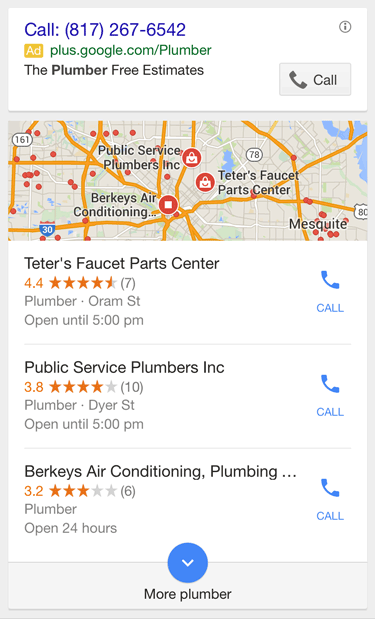
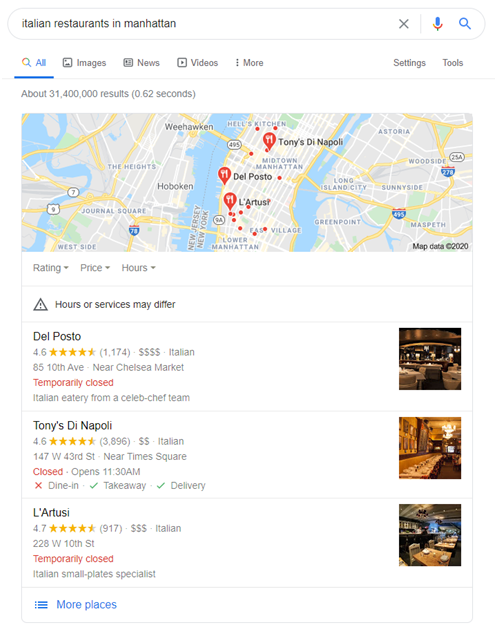
The Google Local 3-Pack is the set of three local business listings that Google displays in a highlighted box at the top of search results when someone searches for a local service or business.
It appears for searches with local intent — queries that include a location (‘plumber Manchester’), proximity (‘dentist near me’), or that Google’s algorithm identifies as locally relevant based on the user’s location.
Each listing in the 3-Pack displays the business name, star rating, review count, address, phone number, hours, and one or two photos.
Clicking a listing opens the full Google Business Profile. Clicking the map opens Google Maps showing all three listings and the broader local results.
Terminology: 3-Pack, Local Pack, Map Pack, Snack Pack
The same format goes by several names depending on who is talking about it and when. ‘Google 3-Pack’ and ‘Local Pack’ are the most common current terms in the local SEO industry. ‘Map Pack’ refers to the same format in the context of Google Maps results.
‘Snack Pack’ was an older informal name from earlier iterations of the format that is now rarely used. All four terms refer to the same three-listing local result format. Throughout the GMB Crush resource library, these terms are used interchangeably.
What appears in the 3-Pack and why it captures the majority of clicks
The 3-Pack appears above the organic search results, which means it is the first substantive content a searcher sees after any paid ads.
For local searches, where the searcher’s intent is to find a specific type of business nearby, the 3-Pack is positioned exactly where and when the decision is being made.
It provides the three pieces of information most critical for a local purchase decision — what the business is, how other customers rated it, and where it is — without requiring the searcher to click through to any website.
This combination of position, content, and immediacy is why the 3-Pack captures a disproportionate share of clicks for local searches.
For most local business categories, the three 3-Pack listings receive the majority of all clicks on the results page, with organic results and paid ads sharing what remains.
See Where You Actually Stand in the Local 3-Pack
GMB Crush’s geo-grid maps your 3-Pack position across your full area. Not just at your address — at every point your customers are searching from.
Most local businesses use some combination of paid advertising, organic SEO, social media, and word of mouth for customer acquisition. Each channel has its strengths.
The 3-Pack has a specific combination of advantages that makes it uniquely valuable for most local business categories — and that most businesses have not fully leveraged.
It cannot be paid for
Unlike paid search ads, which allow any business to appear at the top of results by bidding on keywords, the 3-Pack operates on an earned, not paid, basis. Google explicitly prohibits payment to appear in the Local Pack.
This creates a level playing field where a well-optimised independent business can rank above a national chain with a substantial advertising budget. For small and independent local businesses, this is the most significant competitive equaliser in digital marketing.
It captures decision-stage intent
Social media and content marketing build awareness at the top of the customer acquisition funnel.
The 3-Pack captures customers at the bottom of the funnel, at the exact moment they have decided they need a specific type of business and are actively choosing between options.
The conversion rate from 3-Pack click to customer contact is significantly higher than from most other digital channels because the intent is already present when the customer encounters your listing.
The trust signal that advertising cannot replicate
When Google places a business in the 3-Pack, it is telling the searcher that this is one of the three most relevant and trusted options for their search in their location.
That implicit endorsement carries trust weight that a paid ad label does not. Customers who click on a 3-Pack result are acting on what they perceive as a Google recommendation, not a commercial placement.
This trust differential contributes to the higher conversion rates that 3-Pack traffic produces compared to equivalent paid traffic for most local categories.
Product posts
Product posts are available for certain business categories and allow you to feature specific products with photos, descriptions, and pricing directly on your profile.
They appear in a product carousel on your listing and allow customers to browse what you offer without leaving Google.
For retail businesses, cafes, and other product-focused categories, maintaining a current product catalogue through product posts adds a browsable layer to your profile that drives engagement and signals relevance for product-specific searches.
- How Google Decides Who Ranks in It
Google determines 3-Pack rankings using three core signals: Relevance, Distance, and Prominence.
Understanding what each signal measures and what you can do to influence it is the foundation of any 3-Pack ranking strategy.
Relevance: does your business match this search?
Relevance is how well Google determines your business matches the intent of a specific search query. It is primarily driven by your primary GBP category, your secondary categories, your services menu, your business description, and the coherence between your GBP profile and your website content.
A plumber who has configured their profile with ‘Plumber’ as primary category and ‘Emergency Plumber,’ ‘Drain Cleaning Service,’ and ‘Water Heater Repair Service’ as secondary categories has a higher Relevance signal for plumbing-related queries than a plumber who only set a primary category during initial setup.
Relevance is the signal most businesses leave under-optimised. Most businesses set their category once and never revisit it. Most do not complete their services menu. Most do not connect their website content to their GBP profile systematically.
These gaps cost ranking positions for specific query types while the profile still appears for the broadest searches. Closing Relevance gaps produces faster ranking movement than almost any other optimisation.
Distance: how close are you to the searcher?
Distance is the geographic proximity between your business address (or service area centroid for SABs) and the searcher’s location at the time of the query.
Google calculates this dynamically for every search, which is why the same business can rank differently for the same query depending on where the searcher is located.
You cannot change where your business is physically located. What you can influence is how Google maps your geographic reach: for service area businesses, configuring service areas accurately extends your Distance eligibility across your full territory.
For all businesses, the geographic distribution of your reviewers acts as a supplementary signal — reviews from customers in specific areas strengthen your visibility for searches from those areas.
Prominence: how well-known and trusted are you?
Prominence is the most complex and the most actionable of the three signals. It is Google’s assessment of how well-established, well-used, and well-regarded your business is in its local area.
The inputs to Prominence include:
- Review volume and velocity: how many reviews you have and how consistently new ones arrive
- Star rating: your average rating across all reviews
- Review content: the text of your reviews, which is indexed as keyword content
- Profile completeness: how thoroughly every field of your GBP profile is filled in
- Photo count and recency: how many photos you have and how recently new ones were added
- GBP post activity: how frequently you post updates, offers, and events
- Engagement signals: calls, direction requests, and website clicks from your profile
- Website authority: the strength of your website as a local entity
- Citation consistency: how consistently your business information appears across directories
Prominence is the signal that responds most directly to ongoing effort. A business that consistently builds reviews, maintains its profile, and posts regularly will see Prominence improvement over months that compounds into durable 3-Pack position strength.
Your Competitors Are Already Using GMB Crush
GBP audits, geo-grid ranking maps, competitor category analysis, review monitoring, and AI Overview insights. All in one platform. Start your 14-day free trial today.
This is the aspect of 3-Pack ranking that most business owners do not fully understand, and it is the reason that ‘checking your ranking’ by searching from your own device gives you a misleading picture of your actual market position.
Your 3-Pack position varies by searcher location
Google calculates the Distance signal for every search based on the searcher’s current location, not your business address. A restaurant that ranks first in the 3-Pack for ‘Italian restaurant’ searches made from two streets away might rank third for the same search from half a mile away, and not appear in the 3-Pack at all for the same search from a neighbourhood on the other side of the city.
All three of these searches might represent your target customer, but your Google Analytics and your own searches only tell you about the first case.
The practical consequence is that most businesses significantly overestimate their 3-Pack performance by checking their ranking from their own location.
The ranking you see from your office is your best-case ranking. Your customers in different parts of your area may be seeing entirely different results.
The geo-grid: making the invisible visible
GMB Crush’s geo-grid tracker addresses this directly. It maps your actual 3-Pack ranking position across a grid of geographic points within your defined service area, showing you your ranking for specific search terms at each location on the map.
The result is a visual representation of your 3-Pack footprint — the areas where you rank well, the areas where your ranking declines, and the areas where competitors are currently holding the positions that should be yours.
For most businesses running a geo-grid audit for the first time, the results show a familiar pattern: strong ranking close to the business address, declining ranking at increasing distances, and often near-zero visibility in parts of the service area that the business regularly serves.
Closing those geographic gaps is the targeted, data-driven work that builds a comprehensive 3-Pack presence rather than just a strong position from one vantage point.
The key factor is this: a business that appears to rank first for its primary search term based on its own searches may be invisible to the majority of its potential customers who are searching from different locations. The geo-grid turns this invisible problem into a map you can act on.
- The Complete Strategy to Rank in It
Winning and maintaining a 3-Pack position is not a one-time project. It is a set of ongoing practices that build each of the three ranking signals over time. Here is the complete strategy, organised by the signal each practice builds.
Relevance: category precision and profile specificity
The single highest-leverage Relevance action is choosing the most specific accurate primary category that matches your business’s main service offering.
Check the categories your top-ranking competitors are using with a GMB Crush competitor audit before making your decision — the category data of the businesses already holding the positions you want tells you more about what works in your specific market than any general recommendation.
After setting your primary category precisely, add secondary categories for every distinct service type with its own search demand that your business genuinely offers.
Complete your services menu with every service or product listed with a specific name and description. Write your business description in plain language that naturally includes your primary service terms and your location. Connect every service listed on your GBP to a corresponding page on your website.
Distance: geographic signal building
For service area businesses, configure service areas in your GBP for every town and district you regularly serve.
Actively solicit reviews from customers across your full service geography rather than only from your nearest customers. Each review from a customer in a specific area strengthens your visibility signal for searches from that area.
For fixed-location businesses, ensure your address is entered exactly as it appears in your business registration and on your website. Keep your NAP — Name, Address, Phone — consistent across your GBP profile, your website, and all major directories.
The coherence of this information across sources builds the entity confidence that contributes to Distance signal strength.
Prominence: the long game that compounds
Build a review acquisition workflow and apply it consistently to every customer interaction.
A direct, personal ask from a team member immediately after a positive experience, followed by a text with your Google review link within two hours, consistently outperforms every other review acquisition method.
Four to six new reviews per month, sustained over time, builds a velocity advantage that competitors cannot close quickly.
Post on your GBP profile at minimum once per week. Respond to every review within 24 hours. Add new photos monthly.
Each of these activities contributes to your Prominence score and the compound effect of consistent execution over months produces durable ranking improvement that sporadic effort cannot replicate.
Recommended Reading
GBP Optimization: the complete 14-step guide to every profile signal that affects your 3-Pack ranking
The Google Local 3-Pack as it has existed since its introduction is currently undergoing its most significant structural change.
AI Overviews and the AI Pack format are altering what appears at the top of local search results for an increasing range of queries, and understanding how this evolution affects the 3-Pack is essential for businesses and agencies building their local SEO strategy for the coming period.
The traditional 3-Pack is still dominant for most queries
For the majority of local search queries today, the traditional three-listing Map Pack format remains the dominant local result format.
The optimisation principles that drive 3-Pack rankings — Relevance, Distance, Prominence — continue to apply and continue to produce measurable ranking improvement when applied correctly.
The 3-Pack is not going away. It is being supplemented by new formats for specific query types.
AI Overviews appearing above the 3-Pack
Google’s AI Overviews appear for an increasing proportion of local searches, particularly those with informational intent alongside service intent — queries like ‘best dentist near me’ or ‘plumber for emergency leak.’
These AI-generated summaries appear above the Map Pack and can surface specific local businesses as recommendations alongside the information they provide.
The businesses that appear in AI Overviews as recommendations have profiles with enough specific, structured data for the AI to confidently cite them.
The AI Pack: a new local result format
For certain high-intent local queries, Google is now generating an AI Pack — a curated shortlist of businesses with AI-written summaries drawn from GBP data, replacing or supplementing the traditional three-listing format.
The AI Pack format rewards profile depth and specificity in a way that the traditional 3-Pack does not always require. A business that holds a strong traditional 3-Pack position based primarily on review volume and historical Prominence may not appear in the AI Pack if its profile content is thin or generic.
Businesses preparing for the AI Pack transition need the same foundation as businesses optimising for the traditional 3-Pack, but with greater attention to profile content depth: more specific service descriptions, more complete attribute configuration, and review content that naturally mentions service types.
The AI Pack also places greater weight on the coherence between GBP data and website content, rewarding the businesses that have built their local SEO as an integrated system rather than a series of disconnected optimisations.
Audit Your Profile Against the Top 3 in Your Market
GMB Crush compares every element of your GBP profile against the businesses holding the 3-Pack positions you want. See the exact gaps — categories, reviews, attributes, completeness — driving the difference.
- GMB Crush Takeaways
The Google Local 3-Pack is where local business decisions are made. It cannot be bought, it can only be earned, and the businesses holding 3-Pack positions in competitive markets have built their profiles more completely and maintained them more consistently than the businesses they have displaced. Here is where to start:
- Understand which of the three signals is your limiting factor: check your category precision for Relevance, verify your NAP consistency and service area configuration for Distance, and compare your review count, velocity, and profile completeness against your top-ranking competitors for Prominence.
- Fix your primary category first: check the categories the businesses holding your target 3-Pack positions are using. If they are more specific than yours, change yours. This is the fastest available Relevance improvement and produces ranking movement more quickly than any other single change.
- Build review velocity as a permanent workflow: four to six new reviews per month, acquired through a consistent personal ask at the point of positive customer interaction, compounds into a Prominence advantage that is both hard to build and hard to displace.
- Run a geo-grid audit to understand your actual 3-Pack footprint: do not rely on searches from your own location to assess your ranking. The geo-grid shows you your position at every point in your service area, turning the invisible geographic gaps in your 3-Pack coverage into a specific, targetable list of improvements.
- Prepare for the AI Pack by deepening your profile content: more specific service descriptions, complete health and business attributes, and rich review content that mentions service types. The AI Pack rewards the same foundational work as the traditional 3-Pack but raises the bar for content depth and profile specificity.
The businesses consistently winning the 3-Pack in every local market share one thing: they have treated their Google Business Profile as a managed, continuously optimised asset rather than a directory entry they set up once.
The work required to build and maintain a strong 3-Pack position is not complicated. The businesses that do it consistently hold the positions that drive their growth. The ones that do not are competing for what remains.
One Platform. Every Local Ranking Signal.
Audit, optimise, track, and outrank. GMB Crush gives local businesses and agencies everything needed to understand, target, and win the 3-Pack positions that drive their market. 14-day free trial, no credit card required.