

How to Turn Your GBP Into a New Patient Acquisition System
Most dental practices have a Google Business Profile. Most of them are leaving at least half of its potential untouched. A profile that lists your address and phone number is not an optimised profile. It is a placeholder.
The dental practices consistently filling their appointment books from Google Maps are not doing something fundamentally different.
They have simply treated their GBP as a managed patient acquisition system rather than a directory entry they set up once and forgot.
This guide covers the specific decisions that turn a dental GBP from a passive listing into an active conversion asset: which categories to choose for your specialism, how to configure health attributes that filter for the patients you actually want, how the appointment booking button works and why it matters, and what the practices ranking above you in your market have almost certainly done that you have not.
For the broader local SEO framework that sits around your GBP, the GMB Crush dental SEO guide covers everything beyond the profile itself.

The difference between a GBP profile that generates consistent new patient enquiries and one that does not is rarely about visibility alone.
Most dental practices that appear in the Map Pack for their area are not converting profile views into booked appointments at anything close to their potential rate.
The profile gets seen. The patient hesitates, does not see what they are looking for, and calls the practice ranked next to you instead.
Google’s local ranking algorithm evaluates dental practices on Relevance, Distance, and Prominence.
Your category configuration drives Relevance, which determines which dental search queries your practice is eligible to appear for.
Your location drives Distance. Your reviews, profile completeness, and activity drive Prominence, the competitive layer that separates practices in the same geographic area.
Most dental practices are competitive on Distance. The ones that consistently win new patients from Maps have addressed Relevance and Prominence more deliberately than their competitors.
What patients see and decide in ten seconds
When a prospective patient sees your practice in the Map Pack, they are making a fast decision based on limited information.
They see your practice name, your star rating, your review count, your distance from their search location, and a thumbnail photo. If they click through to your profile, they then see your photos, your hours, your services, your attributes, and recent reviews.
The entire decision about whether to call or move to the next result often happens in under thirty seconds.
Every incomplete field, every missing photo, every attribute left unconfigured is a piece of information the patient does not have that could have tipped their decision in your favour.
From real optimisation work on dental GBP profiles, the practices that consistently outperform their competitors on conversion from profile view to appointment call have measurably more complete profiles across every field category, not just in the high-visibility areas like star rating and photo count.
Find Out Exactly Where Your Practice Ranks on Google Maps
Run a geo-grid audit across your full catchment area. See where you are winning patients and where competitors are filling their appointment books with patients that should be calling you.
Category selection is where most dental practices make the decision that quietly limits their query eligibility for years. The choice is not simply about picking something accurate.
It is about understanding what Google’s category taxonomy signals to the ranking system and configuring your profile to match the queries that drive the patient types you most want to attract.
Primary category options for dental practices
Google offers several dental-specific primary category options, each of which maps to a different query intent and places you in a different competition pool:
- Dentist: the broadest dental category and the correct primary for most general dental practices. It places you in the widest competition pool but also the highest-volume query pool for ‘dentist near me’ and similar searches.
- Cosmetic Dentist: for practices where aesthetic dentistry, teeth whitening, veneers, and smile makeovers represent a primary service and patient acquisition focus. This category maps to a distinct, higher-intent query type that ‘Dentist’ alone does not fully capture.
- Dental Clinic: commonly used for multi-dentist practices, group practices, and dental centres with more than one practitioner. It signals scale and is more commonly used by practices with multiple treatment rooms and a larger team.
- Orthodontist: for practices specialising in braces, aligners, and orthodontic treatment. If Invisalign or fixed braces represent a significant proportion of your new patient enquiries, this category as primary rather than secondary will place you in the more targeted competition pool.
- Pediatric Dentist: for practices that focus on children’s dental care. This category carries strong local search volume from parents searching specifically for child-friendly dental practices.

Secondary categories that expand your patient acquisition footprint
Secondary categories allow your practice to rank for distinct service-type searches without diluting your primary category signal. Add secondary categories only for services you genuinely provide with dedicated capacity:
- Cosmetic Dentist: add as secondary if your primary is ‘Dentist’ and cosmetic work is a significant revenue driver
- Orthodontist: add if you provide Invisalign or fixed appliances alongside general dentistry
- Emergency Dental Service: captures high-urgency queries with strong conversion intent, particularly valuable for practices that offer same-day emergency appointments
- Teeth Whitening Service: a distinct query intent with its own search volume, worth adding for practices that actively promote whitening treatments
- Oral Surgeon: for practices offering surgical treatments including extractions, implants, and bone grafting
Use GMB Crush’s competitor audit to check the exact primary and secondary category configuration the top-ranking practices in your local market are using.
The category data of the practices consistently outranking you tells you more than any keyword tool about what is actually driving their Map Pack positions.
Your Competitors Are Already Using GMB Crush
GBP audits, geo-grid ranking maps, competitor category analysis, review monitoring, and AI Overview insights. All in one platform. Start your 14-day trial today.
- Health Attributes and Booking Setup
Google provides dental practices with a set of health-specific profile attributes that most practices either configure incompletely or ignore entirely.
These attributes appear directly on your profile in search results and on Maps, influence click-through rate, and in some cases act as filters in how Google matches your practice to specific search queries.
Health and accessibility attributes
The attributes that carry the most practical value for dental practices:
- Accepts new patients: arguably the most important single attribute for any dental practice actively seeking patient growth. When this is configured and visible on your profile, it directly answers the question most prospective patients have before they decide whether to call. Practices that are not accepting new patients should configure this as no to avoid wasted calls from patients who will not be able to register.
- Accessibility: wheelchair accessible entrance, accessible parking, accessible toilet. These are filtering criteria for a meaningful segment of prospective patients, and practices that configure them correctly are more likely to appear when accessibility is explicitly part of the search intent.
- Insurance and payment: accepted insurance plans, payment options including finance arrangements, and whether the practice offers NHS treatment alongside private. For UK practices in particular, the NHS vs private distinction is a primary filter for many searchers.
- Appointment required vs walk-ins welcome: important for emergency dental searches where the patient needs to know immediately whether they can attend without prior booking.
- Amenities: free Wi-Fi, children’s play area, TV in waiting room. These are lower-priority attributes but contribute to the overall impression of a comprehensive, thoughtfully managed profile.
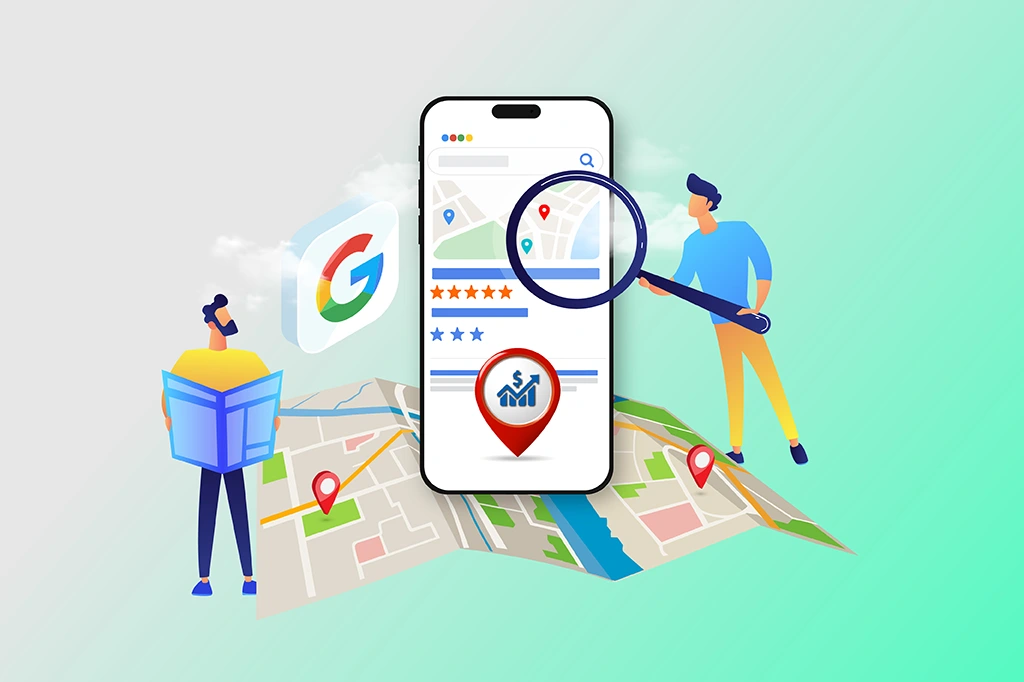
The appointment booking button and why it converts
Google’s appointment link feature adds a prominent booking button directly to your GBP profile. For dental practices with online booking capability, this is one of the highest-leverage single configurations available on the entire profile.
A patient who can book an appointment from your Google profile without visiting your website removes the most common friction point in the conversion journey.
Configure your appointment link to point directly to your booking page, not your website homepage. Every additional click between the Map Pack profile and the booking form reduces conversion rate.
If your practice management software supports direct Google booking integration, enable it. If it does not, a direct URL to your online booking page is the correct configuration.
Services menu: every treatment as an indexed keyword
Google’s services section allows you to list individual treatments with names and descriptions, and every entry is indexed separately as a keyword signal. For dental practices, this is a significant ranking and conversion opportunity that is almost universally underused.
A complete dental services menu might include: ‘Dental Check-Up and Clean,’ ‘Teeth Whitening,’ ‘Dental Implants,’ ‘Invisalign Clear Aligners,’ ‘Dental Veneers,’ ‘Root Canal Treatment,’ ‘Tooth Extraction,’ ‘Children’s Dentistry,’ ‘Emergency Dental Appointment,’ ‘Dental Crowns and Bridges,’ ‘Dentures,’ ‘Gum Disease Treatment.’
Each entry expands your keyword eligibility for the corresponding search queries and also provides prospective patients with an immediate overview of what your practice offers, increasing the likelihood they call rather than continuing to browse.
Recommended Reading
Google Maps for Dentists: how to rank in the 3-Pack and earn more patient calls
Dental practices with more than one dentist face a GBP structural question that solo practices do not.
Google’s guidelines allow individual practitioners to have their own separate GBP listings under certain conditions, and the way you configure this structure either multiplies your local search visibility or creates compliance risks that can result in suspensions.
Competing in high-density legal markets
When individual practitioner listings are appropriate
Google allows individual dentist listings separate from the practice listing when the practitioner can be contacted directly at a unique phone number and when they practise with sufficient independence from the main practice.
A dental associate who works fixed sessions at a single practice and is booked exclusively through the practice's central reception does not typically meet this threshold.
A partner dentist with their own patient list, their own direct line, and a degree of independent practice within the group may qualify.
The most common mistake multi-dentist practices make is creating individual practitioner listings for all their dentists as a perceived ranking strategy, when in reality it creates duplicate listings that Google's systems flag for deduplication and that can result in suspension of the primary practice listing.
If you are uncertain whether individual listings are appropriate for your dentists, the safest approach is to manage a single, fully optimised practice listing and represent all practitioners through the team photos and service descriptions on that profile.
Multi-location dental group structure
For dental groups operating multiple practice locations, each physical location that serves patients at that address is eligible for its own GBP listing.
A group with four practices across a city should have four separate, independently optimised GBP listings, each building its own local ranking signals, its own review profile, and its own geo-grid visibility in its immediate catchment area.
The most common failure mode for dental groups is creating the additional listings but treating them as secondary to the main practice.
Incomplete profiles, identical service descriptions across all locations, no location-specific review acquisition, and all practices linking to the same website homepage rather than location-specific pages are all optimisation gaps that leave patient acquisition potential uncaptured at each satellite location.
GMB Crush's multi-profile management lets you monitor and audit all practice locations simultaneously, catching performance gaps before they become embedded competitive disadvantages.
- GBP Posts That Drive Appointments
GBP Posts are one of the most consistently underused features on dental practice profiles.
They appear directly on your profile in search results and on Maps, they signal to Google that your profile is actively managed, and they provide a direct conversion path from search result to appointment booking for patients who are already in decision mode.
Post types that work for dental practices
The three post types with the strongest performance track record for dental patient acquisition:
- Offer posts: time-limited promotions with a clear monetary value. New patient offers, teeth whitening specials, Invisalign consultation promotions, and seasonal campaigns. These posts show a discount or offer badge on your Map Pack listing and consistently produce higher click-through rates than standard posts.
- What’s New posts: new treatments added, new technology acquired (digital x-rays, CBCT scanning, CAD/CAM same-day crowns), new team members joining. These posts signal a progressive, up-to-date practice and build trust with patients who are comparing their options before committing to registration.
- Event posts: open days, free consultation events, children’s dental awareness events. The event format displays date and time prominently and is appropriate for any practice-hosted activity with a specific date.

Post frequency and what it signals to Google
GBP posts expire after seven days unless set as Events. A dental practice posting consistently once or twice per week signals a live, actively managed profile that Google weights positively in the Prominence calculation.
That Prominence signal is one of the factors that determines your 3-Pack position for the searches that drive your highest-value patient enquiries.The content of the post matters less than the consistency.
A practice that has posted every week for twelve months has built a Prominence signal that a practice with three recent posts cannot replicate quickly, regardless of the quality difference between the individual posts.
Keep post copy between 100 and 200 words. Include a clear call to action that links directly to your booking page or the relevant treatment information page. Use original photos where possible rather than stock images, because photo diversity and originality is a quality signal that Google evaluates at the profile level.
Review responses as a GBP activity signal
Responding to reviews is classified as profile activity by Google and contributes to the Prominence signal in the same way that posts do.
For dental practices, every response also serves as patient-facing communication that prospective patients read when evaluating your profile.
Responses to positive reviews should be personalised, brief, and naturally include the practice name and a service term where relevant. This makes your response a keyword signal in addition to an activity signal.
For negative reviews, the principle that applies across all healthcare practice areas is consistent: never confirm or deny that the reviewer is a patient, never reference treatment details or outcomes in your response, and never engage in a public dispute.
Acknowledge the concern, state your commitment to patient experience, and invite direct contact.
For a complete guide to managing your Google Business review presence across acquisition, volume strategy, and compliance, the GMB for Dentists guide covers all of it in one place.
Any response that reveals patient information, even indirectly, creates a compliance exposure that far outweighs any reputational benefit of addressing the specific complaint publicly.
Stop Guessing. Start Ranking.
GMB Crush shows you exactly what the top-ranking dental practices in your area are doing differently, and what to fix on your profile first to close the gap.
Dental is one of the healthcare categories where AI-driven changes to local search results are having the most noticeable effect on which practices get found.
AI Overviews and the AI Pack format are reshaping how dental queries are answered and which practices appear in them, and the practices that have built complete, structured GBP profiles are gaining early visibility in the new format.
AI Overviews and dental informational queries
Google’s AI Overviews appear for a wide range of dental informational queries: ‘how much do dental implants cost,’ ‘how long does teeth whitening last,’ ‘what happens at a dental check-up,’ ‘how to find an NHS dentist accepting patients.’
These summaries appear prominently in search results and can surface specific dental practices as recommended contacts alongside the information they provide.
The profile content that feeds these recommendations is structured data: your category, your service entries, your description text, and your review content.
Practices whose service descriptions use plain, specific language that matches how patients search, and whose reviews naturally mention treatment names and patient experiences, are more likely to appear in AI-generated dental recommendations.
A services menu entry that reads ‘Dental Implants: permanent tooth replacement using titanium implant posts, including bone grafting for suitable candidates’ is both more useful to patients and more likely to be retrieved by an AI system than a generic ‘Implants’ entry with no description.
The AI Pack and dental local search
Current Google behaviour shows the AI Pack format appearing for high-intent local dental searches.
For queries like ‘dentist near me accepting new patients’ or ’emergency dentist today,’ this format generates a curated shortlist of practices with AI-written summaries drawn from GBP data and review content.
The practices appearing in these summaries consistently have the profile characteristics that give the AI enough structured information to generate a confident, accurate description: complete service menus, configured health attributes, specific review content, and consistent post activity.
The key factor is this: in the AI Pack format, proximity to the searcher is still relevant but it is no longer the primary determinant of which practices appear. A practice with a complete, entity-rich profile can outperform a geographically closer competitor with a thin profile in AI-generated dental results. The practices that build this advantage now will hold it as AI-driven search becomes the dominant discovery format for healthcare providers.
Your GBP and website as a combined entity signal
Google evaluates the coherence between your GBP profile and your website as part of how it constructs its understanding of your practice as a local entity.
A GBP profile that lists dental implants as a service, supported by a dedicated implant page on your website with substantive content about the procedure, cost, and your approach, sends a stronger combined entity signal than either element alone.
For guidance on building the website side of that entity signal, the dental office SEO tips guide covers the on-site optimisation that complements everything covered here.
The more coherently your profile and website reinforce the same practice identity and service set, the stronger the entity signal and the more consistently you will rank for the treatment-specific queries that drive your highest-value patient acquisitions.
- GMB Crush Takeaways
Your Google Business Profile is the primary digital asset determining how many new patients find your practice every month.
The gap between a profile that fills your appointment book and one that does not is not about star ratings or photo count alone.
It is about the completeness and precision of every structured data field Google uses to evaluate your profile.
Here is where to start:
- Review your primary category today: is it set to the most specific, specialism-accurate option for your practice? A cosmetic-focused practice using ‘Dentist’ as primary instead of ‘Cosmetic Dentist’ is competing in the wrong pool for its highest-value queries. Run a GMB Crush competitor audit to check what the top-ranking practices in your area are using.
- Configure your health attributes completely: ‘Accepts new patients’ is the single highest-impact attribute for patient acquisition and is left unconfigured on the majority of dental GBP profiles. Set it explicitly, along with accessibility attributes, insurance options, and payment methods.
- Connect your appointment booking link directly to your booking page: every additional click between a patient finding your profile and booking an appointment reduces conversion. The booking button on your Map Pack listing should go directly to your scheduling page, not your homepage.
- Complete your services menu with every treatment you offer and a plain-language description for each: this is the fastest available expansion of your keyword eligibility and directly increases the specificity of the AI-generated summaries that will reference your practice in dental search results.
- Run a GMB Crush geo-grid audit for ‘dentist near me,’ your primary specialism term, and your highest-value treatment keyword: find exactly where in your catchment area competitors are capturing patient enquiries your practice should be receiving, and direct your optimisation effort toward those specific gaps.
Every prospective patient searching for a dentist in your area is making a decision right now based on what they see in the Map Pack.
Your profile either gives them the information they need to choose you, or it sends them to a practice that did.
The gap between those two outcomes is not complicated to close. The practices that close it consistently are the ones that treat their GBP as a managed patient acquisition system rather than a profile they created and forgot.
One Platform. Every Patient Acquisition Signal.
Audit, optimise, track, and outrank. GMB Crush gives dental practices and the agencies managing them the data to dominate the local Map Pack. 14-day trial available.