How to Dominate the Map Pack and Sign More Cases
Someone just walked away from a car accident. Or they are sitting in an emergency room waiting for treatment. Within the next hour, the majority of them will open Google and search for a personal injury lawyer near them.
That search is happening right now in your market, and the attorney who appears first in the Map Pack is the one who gets the call.
Personal injury is one of the most competitive and most lucrative local search categories in legal.
The combination of high urgency, high case value, and the contingency fee model means that a single signed case from a Google search can be worth tens of thousands of dollars.
Your Google Business Profile is either positioned to capture that moment, or it is not.
Most are not.
Personal injury attorneys operate in a market where the economics of lead acquisition are unlike almost any other professional service. A single signed case, whether a car accident, slip and fall, or medical malpractice matter, can produce a fee in the range of tens of thousands of dollars on a contingency basis. That economic reality makes every Google Maps lead extraordinarily valuable, which is exactly why the competition for Map Pack positions in personal injury is as intense as it is in any local search category.
The Local 3-Pack captures the dominant share of clicks for high-intent local searches. For personal injury, the search intent is acute. The person who just had an accident is not conducting research. They are making an immediate decision with limited information, and the attorney who appears first with a credible profile is the one who receives the consultation request. The attorneys ranked below the Map Pack, or not appearing in it at all, are effectively invisible to that prospective client.

The three signals determining your position
Google evaluates local businesses on Relevance, Distance, and Prominence. Your GBP category configuration drives Relevance, which determines whether Google considers your firm eligible to appear for specific personal injury queries. Your location and service area drive Distance.
Your reviews, profile completeness, and ongoing activity drive Prominence, the competitive layer that separates firms once the first two signals are satisfied.
Most personal injury firms are not losing on Distance. They lose on Relevance because their category selection is generic, and on Prominence because their profile is incomplete and their review cadence is inconsistent. Both are directly within your control, and addressing them is what separates the firms at the top of the 3-Pack from those that never appear there despite years in practice.
Find Out Exactly Where You Rank on Google Maps
Run a geo-grid audit and see your Map Pack position across your entire service area. Know where you are winning and where competitors are taking calls that should be yours
- Categories and Profile Foundation
The decisions you make during the initial GBP setup either limit or amplify everything that follows. Personal injury is a competitive enough category that getting the foundation wrong means competing at a permanent disadvantage, regardless of how strong the firm’s offline reputation is. Google cannot translate offline authority into online ranking without the right structured signals.
Primary category selection for personal injury
Your primary GBP category is the strongest single relevance signal on your profile. For personal injury attorneys, the correct primary category is ‘Personal Injury Attorney.’ This is the most search-aligned category for your practice area and places you in the right competition pool for the queries that drive your highest-value cases. Setting a broader option like ‘Lawyer’ or ‘Legal Services’ puts you in a wider, less relevant pool for the queries where personal injury intent is the dominant signal.
Secondary categories to add based on your actual practice focus:
- Car Accident Lawyer: one of the highest-volume sub-categories in personal injury, with its own distinct search demand and competition pool
- Medical Malpractice Attorney: a high-value specialism with separate query intent from general personal injury searches
- Workers Compensation Attorney: distinct search behavior from general PI, relevant if your firm handles work-related injury cases
- Wrongful Death Attorney: a separate category with its own query intent and emotional search context
Each secondary category creates a new eligibility window for a distinct set of queries. A firm with a well-structured category stack ranks for multiple injury types simultaneously. A firm with only a primary category competes for one. You can see the exact category configuration your top-ranking local competitors are using inside GMB Crush’s competitor audit without manually searching each profile.

Profile fields that directly impact ranking
- Business description: use this to articulate your practice focus, geographic coverage, contingency fee model, and what sets your firm apart. Write it in the language your clients use when they are searching in distress, not the language you use in a court filing.
- Services menu: add each case type as a separate service entry with a plain-language description. ‘Car Accident Claims,’ ‘Slip and Fall Cases,’ ‘Medical Malpractice,’ ‘Truck Accident Claims,’ ‘Motorcycle Accident Cases.’ Each entry is indexed separately and expands your keyword relevance without requiring website changes.
- Appointment link: connect directly to your consultation or case evaluation page. This adds a booking button to your profile and removes the friction between discovery and first contact.
- Business hours and phone number: personal injury inquiries often happen outside standard office hours. If you have an intake line or answering service available after hours, make this visible in your profile. A prospective client who cannot reach you immediately after an accident will call the next firm on the list.
Your Competitors Are Already Using GMB Crush
Geo-grid ranking maps, GBP audits, competitor category analysis, AI Overview insights, and review monitoring. All in one platform.
- Multi-Location Firm Strategy
Personal injury firms operate differently from most local businesses when it comes to geographic presence. Many established PI practices maintain multiple office locations across a metropolitan area or state, specifically to strengthen their local search signals in multiple markets. This structure is both a ranking advantage and a management challenge that most firms handle inconsistently.
One GBP listing per physical location
Google’s guidelines are clear: each physical business location that serves clients at that address is eligible for its own GBP listing. For a personal injury firm with three offices across a metro area, three separate, fully optimized GBP listings is the correct configuration. Each listing competes in its own local Map Pack, targets its own surrounding neighborhoods, and builds its own review profile over time.
The mistake most multi-location firms make is creating the additional listings but then managing them poorly, leaving them incomplete, failing to build reviews at each location separately, or linking all locations to the same website page rather than location-specific pages. A well-managed multi-location GBP strategy multiplies your market coverage in a way that a single listing, regardless of how well optimized, cannot replicate.
Service area configuration for PI firms
Personal injury clients do not always come to your office. You go to them. For cases where the client is hospitalized or physically unable to travel, the geographic reach of your practice extends beyond your office locations. Configuring service areas for each GBP listing to reflect the actual geographic scope of your practice, including the counties and districts you regularly take cases from, builds ranking signals for those areas over time.
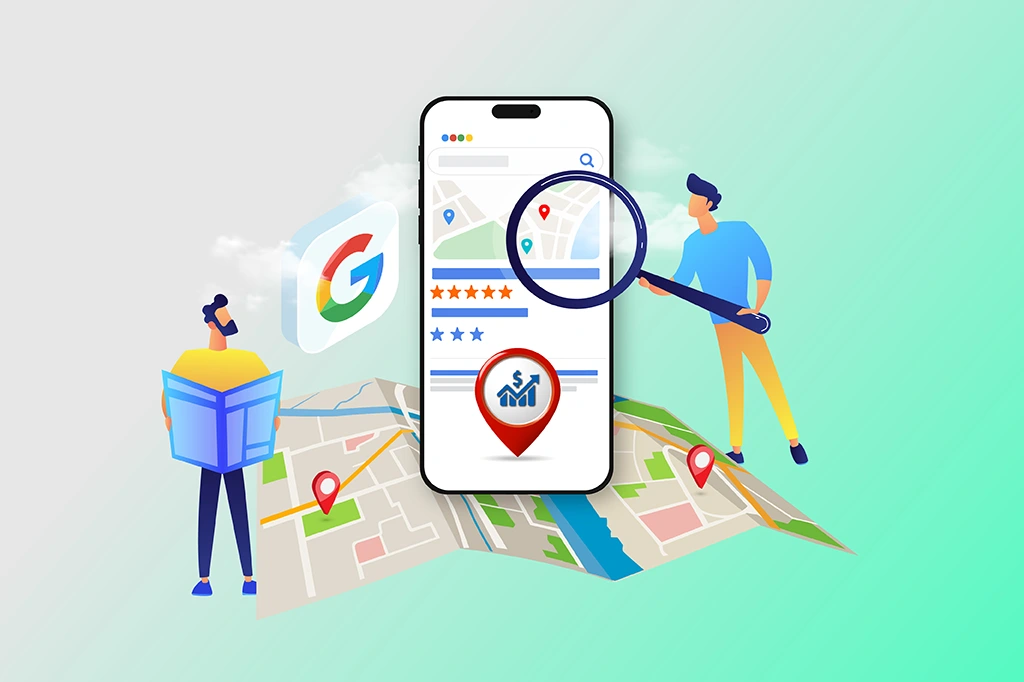
GMB Crush’s geo-grid tracker maps your Map Pack ranking position across a grid of locations within your service area for each listing independently, showing exactly where each office location is visible and where competitor firms are capturing leads in your market. In a major metropolitan area, the difference between ranking first for personal injury searches in a specific neighborhood and ranking eighth can represent a substantial number of case inquiries per month.
Recommended Reading
GBP Ranking Factors: Relevance, Distance, and Prominence explained in full
Review acquisition in personal injury presents a specific challenge that does not exist in most other local service categories. Many clients are reluctant to leave public reviews while their case is ongoing, and some settlement agreements include confidentiality provisions that affect what a client can publicly say about their experience. Understanding these constraints is not a reason to deprioritize reviews. It is a reason to build a smarter, more client-sensitive review strategy.
Why review volume is a competitive moat in PI
Personal injury is one of the legal categories where review volume creates a compounding competitive advantage. The client who is deciding between two personal injury attorneys in the Map Pack immediately after an accident is making a trust decision under stress. They have very little time and very little information. A firm with 90 reviews versus a firm with 15 reviews will win that trust decision almost every time, regardless of whether the attorneys are equally qualified. The investment in building review volume now creates a gap that competitors cannot close quickly, because reviews accumulate over time and cannot be manufactured overnight.
Timing the ask correctly in a PI context
The most effective window for requesting a personal injury review is after case resolution, not during active litigation. Once a case has settled or concluded and any required waiting periods have passed, a personal, direct communication from the attorney or a senior member of the firm is far more effective than an automated review request workflow. The client has received their outcome, the relationship is at its most positive, and there is no active litigation concern creating hesitation.
For clients whose settlements include confidentiality clauses, the ask should acknowledge this upfront and focus on what the client is permitted to share: their experience of working with the firm, the communication they received, and their overall impression of the representation. A review that says 'the team kept me informed throughout the entire process and handled everything professionally' is a valuable review that does not require the client to disclose any case-specific information.
What review content signals to Google
The written content of your reviews is indexed by Google and contributes directly to your profile’s keyword relevance. A client who writes ‘they handled my car accident claim efficiently and kept me updated throughout’ has added ‘car accident claim’ as an indexed keyword signal on your profile. Multiply that across dozens of reviews that each mention a specific case type, and your profile’s relevance for those terms grows substantially over time without any additional optimization work required.
Responding to every review, positive and negative, is a Prominence signal. It also signals to every prospective client reading your profile that the firm is responsive and engaged. In personal injury, where the client relationship often spans months or years, perceived responsiveness is a strong trust signal that influences consultation requests.
Stop Optimizing Blind
GMB Crush shows you exactly what your top-ranking competitors are doing, where you rank across your service area, and what to fix first. No more guessing.
- Content That Ranks for PI Queries
Your website content and GBP profile function as a combined local ranking system. Google evaluates the coherence between your GBP profile signals and your website content. A profile listing car accident cases as a service, supported by a well-structured car accident page on your website, creates a stronger combined entity signal for that practice area than either one in isolation.
Practice area pages as entity reinforcement
Every major case type your firm handles should have its own dedicated website page with substantive content. Not a paragraph on a general personal injury page. Each page should have its own URL, its own title tag addressing a specific query type, and enough content to demonstrate genuine expertise. ‘Car Accident Attorney,’ ‘Truck Accident Lawyer,’ ‘Slip and Fall Cases,’ ‘Medical Malpractice,’ ‘Wrongful Death Claims’ should each have their own page if your firm regularly handles them.
Each dedicated practice area page reinforces the corresponding service entry on your GBP profile and strengthens your firm’s entity signal in Google’s Knowledge Graph for that specific case type. This combination of structured GBP data and coherent website content is what allows smaller, focused firms to outrank larger, more established firms that have built broad profiles without the underlying content depth.

Location-specific pages for multi-market practices
If your firm operates across multiple cities or counties, a single location page will not capture the full geographic ranking potential available to you. Dedicated city or county pages, each with substantive content about your practice in that jurisdiction, support your GBP service area configuration and create local relevance signals for queries in those areas. A page addressing personal injury representation in a specific county that discusses local court procedures, statute of limitations rules for that jurisdiction, and your firm’s experience there will outperform a generic page attempting to rank for the same geographic terms.
The conversion factor most PI websites underestimate
A prospective personal injury client who reaches your website immediately after an accident or injury is in a state of physical and emotional distress. The website’s job is not to present the full breadth of your legal expertise. It is to answer three questions in the first ten seconds: can you help me with my type of case, are you located where I need you to be, and how do I reach you right now. Every second of friction between landing on the page and making contact is a prospective client who clicks back and calls the next attorney on the list. Mobile performance is not optional in personal injury. Accident searches happen on phones, often immediately after the incident, and a slow or confusing mobile experience loses cases that faster competitors collect.
The local search landscape for personal injury queries is shifting in ways that directly affect how prospective clients find attorneys. AI Overviews and the AI Pack format are reshaping the results page for high-intent legal searches, and the firms that have built complete, well-structured profiles are gaining an early advantage in the new format while those with thin profiles are losing visibility they do not realize they are losing.
AI Overviews for injury-related searches
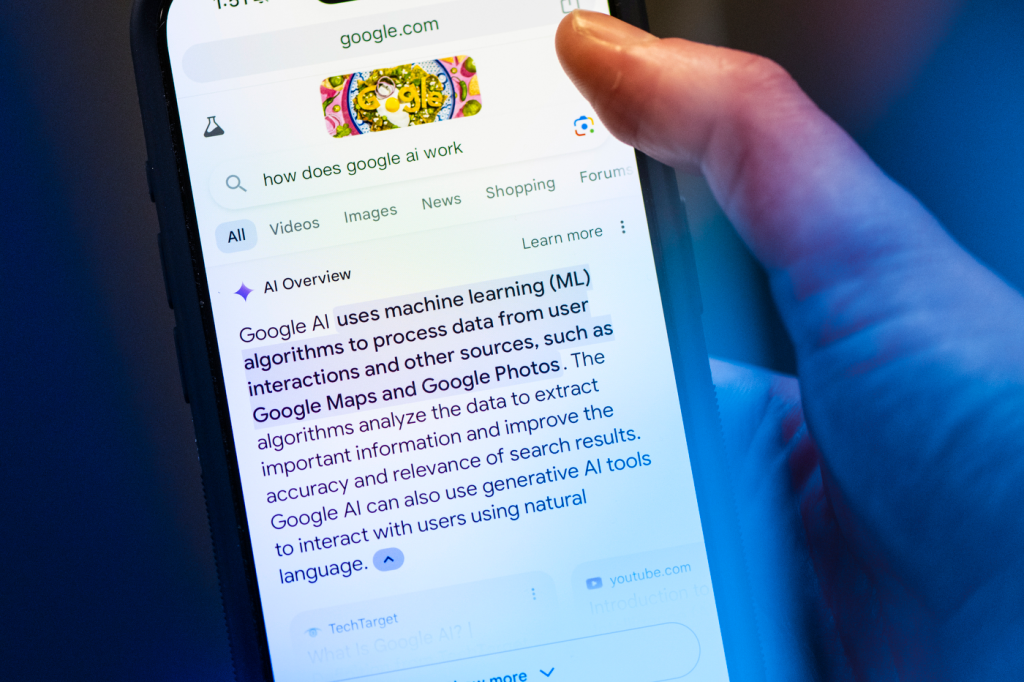
Google’s AI Overviews are appearing for personal injury informational queries with increasing frequency: ‘what to do after a car accident,’ ‘how long do I have to file a personal injury claim,’ ‘do I need a lawyer after a slip and fall.’ These AI-generated summaries are often the first thing a prospective client reads after an accident, and they can surface local attorneys as recommended contacts alongside the information.
The content that gets retrieved for these summaries comes from GBP profile data, review text, and website content. Firms whose profiles contain specific, plain-language descriptions of their practice areas and whose review content uses natural case-type language are more likely to be included in AI-generated recommendations than firms with thin or generic profiles. This is not a future consideration. It is current Google behavior affecting personal injury searches right now.
The AI Pack replacing traditional local results
Current Google behavior shows the AI Pack format replacing or appearing alongside the traditional Map Pack for certain high-intent local searches. For personal injury queries with strong urgency signals, such as ‘car accident lawyer near me’ or ‘injury attorney today,’ this format is appearing with increasing frequency. In the AI Pack, Google generates a brief AI-written summary of each firm based on structured GBP data and review content.
The key factor is this: firms with rich, specific, well-reviewed profiles are appearing in AI Pack summaries. Firms with thin, incomplete profiles are being passed over regardless of geographic proximity to the searcher. The AI Pack rewards structured completeness in a way the traditional Map Pack does not.
Multi-platform visibility for PI attorneys
Prospective clients are also using ChatGPT, Perplexity, and Gemini to ask for attorney referrals and legal guidance after accidents. These platforms retrieve structured business data from indexed sources, and a well-built GBP profile with precise categories, strong reviews, and complete service descriptions is the content foundation that all of these systems draw from. A single well-optimized profile creates citation eligibility across multiple AI platforms without requiring separate optimization strategies for each one.
- GMB Crush Takeaways
Every personal injury client who searches Google after an accident is making a fast decision with limited information. Your GBP profile is the primary information surface that decision is based on. A single signed case from a well-positioned Map Pack listing can produce a fee that far exceeds the cost of any optimization investment. Here is where to act first:
- Confirm your primary category is 'Personal Injury Attorney' and add secondary categories for every major case type you handle: 'Car Accident Lawyer,' 'Medical Malpractice Attorney,' 'Workers Compensation Attorney.' Each one expands your query eligibility without touching your website.
- Complete your services menu with plain-language case type descriptions: every case type you regularly handle should be a separate service entry that Google indexes independently. This is the fastest available keyword expansion for any PI profile.
- If your firm has multiple office locations, confirm each has its own fully optimized GBP listing, its own location-specific website page, and its own review-building workflow. A second office with a thin profile is a ranking opportunity that is not being captured.
- Build your review request workflow around case resolution timing: a personal, direct ask from the attorney after a case concludes, timed appropriately relative to any settlement confidentiality requirements, consistently outperforms automated campaigns for personal injury clients.
- Run a GMB Crush geo-grid audit for your top three case-type search terms across your full market: find exactly where competitors are capturing consultation requests that should be coming to your firm, and target those gaps with focused optimization rather than spreading effort evenly.
The next person who needs a personal injury attorney in your market is searching right now.
The attorney who appears first in the Map Pack with a complete, credible profile captures that consultation.
Every incomplete field, sparse review profile, and missing service entry is a reason for Google to show that prospective client a competitor instead of you.
One Platform. Every Local Ranking Signal
Audit, optimize, track, and outrank. GMB Crush gives you the data and the tools to dominate the Map Pack in your market.