

How To Rank Beyond Your Pin
Your pin sits where it sits. You cannot move your address closer to every customer.
What you can do is convince Google your relevance stretches further than your street.
Proximity is one of the three pillars Google ranks local businesses on, alongside relevance and prominence, and industry ranking surveys consistently place it near the top of the list.
Most businesses treat it as fixed. It is not. The distance at which your listing stops appearing is a ceiling you can raise, and raising it is some of the highest-return work in local SEO because every extra half mile of reach is a new pool of customers.
When someone searches, Google weighs how close each candidate business is to the searcher.
Two listings with similar strength: the closer one usually wins.
That means your effective market is not your city. It is the radius inside which your profile is strong enough to beat whoever is physically closer to the searcher.
The play is not fighting the algorithm. It is stacking relevance and prominence signals tied to the specific areas you want, so that when the distance math runs, your listing carries enough weight to win searches happening further from your pin.
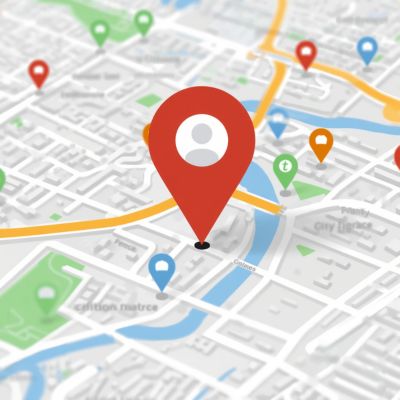
Your market is not your city. It is the radius your profile can defend
Before building anything, find out where your reach actually ends.
A geo grid scan lays your rankings over the map, point by point. Green close to your pin fading to red a mile out: that red boundary is your current proximity ceiling, drawn in data.
Note which neighborhoods sit just past the boundary. Those near-miss zones are your targets, because pushing a position from eighth to third in an adjacent neighborhood pays far faster than trying to conquer the far side of town.
- Location Pages That Earn Reach
For each target neighborhood, your website should give Google a reason to associate you with it.
A location page that names the area, describes the work you do there, answers the questions customers from that area ask, and includes directions from that neighborhood to you.
Thin pages with a swapped city name do nothing. Pages with real local substance become the relevance anchor that every other proximity signal hooks into.
This matters double for service area businesses, where the pin matters less and the coverage story matters more.
Audit how your site supports every area you serve.
Google My Maps lets you build custom maps under your own account: title, description with your business details, and layers of driving directions from points around your service area to your location. Some SEOs call these pin drops.
Used honestly, this is simply structured geographic content on a Google property: real routes from real neighborhoods to your real business.
Build one map per target area, keep it to a couple of direction sets so it stays readable, write a genuine description, and set sharing to public.
Choose recognizable starting points like parks or landmarks in the neighborhood you are targeting.
Keep expectations straight: these are supporting signals, not a ranking button.
They reinforce the geographic association your location pages and reviews are already building.
On their own they do little. Stacked on real relevance, they help widen the edge.
- Embedding Maps Where They Count
Each custom map generates an embed code. Place it on the matching location page, sized to fit your layout.
Now the neighborhood page on your site and the Google-hosted map reference each other, which is exactly the kind of consistent geographic entity signal Google can verify.
Embed your main profile map on your contact page while you are at it.
Reviews that mention where the customer came from are proximity gold.
A review saying the crew drove out to my place in Riverside connects your business to Riverside in Google’s own content, written by a third party.
You cannot script reviews, but you can shape them. When you ask, ask people from your target areas first, and phrase the request naturally: mention what we did and whereabouts you are.
A handful of area-named reviews across your target neighborhoods quietly reinforces every other signal on this list.
A customer naming their neighborhood in a review is a proximity signal you cannot buy.
- Track the Radius Expanding
Proximity work compounds slowly, then visibly. Rescan your geo grid on the same keywords every month and watch the boundary. Green creeping into a neighborhood that was red is the entire point of this work, made measurable. When a target area turns, move to the next ring out and repeat. Six months of this and your effective radius looks nothing like where you started.
Watch your reach grow scan by scan with GeoGrid Pro.
- GMB Crush Takeaways
- Proximity is a ceiling you can raise, not a fixed sentence
- Grid scan first; target the near-miss neighborhoods just past your boundary
- Build location pages with real substance for every target area
- Use My Maps and embeds as honest supporting signals, never as the whole plan
- Rescan monthly and expand ring by ring as areas turn green